
How to Prepare Your Organization's Training Architecture for 2027: The Global LMaaS Playbook
Learn how global enterprises in the USA, UK, Australia, Singapore, and Saudi Arabia prepare for 2027 compliance mandates using Learning-as-a-Service.
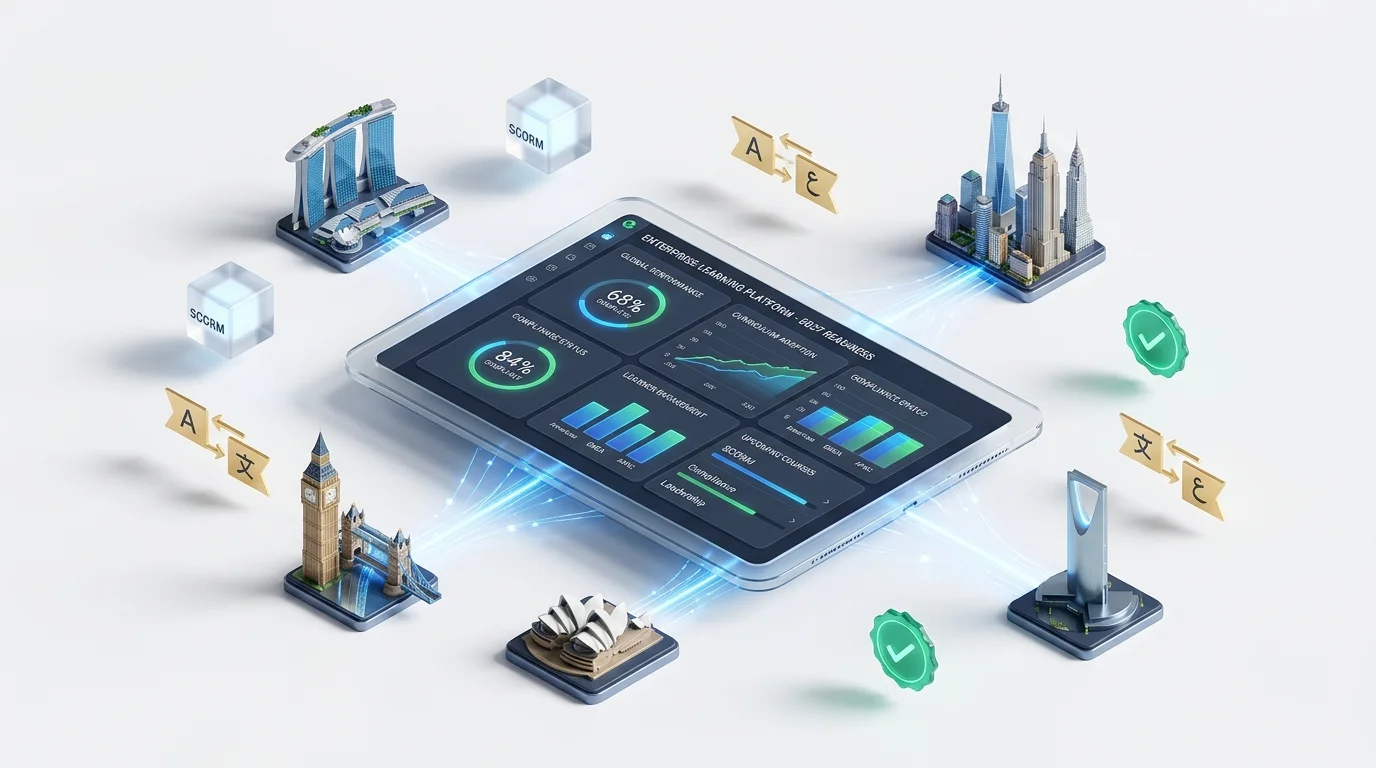
Table of Contents ▼
Quick Answer
A strategic C-suite playbook detailing how enterprise organizations transition from costly, slow in-house L&D teams to outsourced Learning-as-a-Service (LMaaS) ahead of 2027. Explores regulatory mandates across the United States, United Kingdom, Australia, Singapore, and Saudi Arabia, 14-day rapid LMS deployment, 50+ language translation, seat lifecycle economics, and smartphone offline QR verification.
Key Takeaways
- Waiting until the beginning of 2027 to modernize corporate compliance and onboarding guarantees operational downtime, regulatory non-compliance, and lost productivity.
- Hiring an in-house Instructional Designer and LMS administrator costs between $120,000 and $180,000 annually and takes 6 to 9 months to produce a single comprehensive curriculum.
- Under the Learning-as-a-Service (LMaaS) model, TheEduAssist handles instructional design, SCORM packaging, LMS architecture, and ongoing updates, delivering a live branded system in 14 calendar days.
- International workforces in Singapore, Australia, the USA, the UK, and Saudi Arabia require localized, native training; LMaaS delivers native course translations across 50+ languages.
- Seat governance is streamlined through automated license recycling: 1 signup equals 1 unique active seat, inactive users are pruned via one click, and returning workers in 2027 reactivate as new active seats.
- Field supervisors and department leaders verify workforce credentials instantly on site in 5 seconds using standard smartphone camera QR scanning without specialized hardware.
As enterprise organizations approach 2027, the traditional corporate training model has reached a breaking point.
For the past decade, human resources and operations leaders operated under an assumption: if you need to train your workforce, you either purchase a generic catalog of canned compliance courses or you spend nine months and hundreds of thousands of dollars recruiting an in-house learning and development (L&D) team.
Heading into 2027, that approach is obsolete.
Regulatory requirements are shifting across every major economic corridor. In the United States, workplace safety and wage-hour tracking rules demand verifiable, time-stamped digital compliance. In the United Kingdom, statutory duty-of-care frameworks require continuous competency tracking. In Australia, psychosocial workplace safety regulations carry substantial corporate penalties. In Singapore, the Ministry of Manpower (MOM) and SkillsFuture mandate rigorous, auditable skill standards. In Saudi Arabia, Vision 2030 Saudization (Nitaqat) targets demand rapid, localized upskilling of national talent.
Organizations that wait until January 2027 to address these shifts will find themselves paralyzed by compliance backlogs, skyrocketing onboarding costs, and frontline talent churn.
Forward-thinking enterprises are adopting a fundamentally faster, more scalable model: Learning-as-a-Service (LMaaS).
1. The In-House Hiring Myth: Why Internal L&D Teams Slow You Down
When business leaders recognize that their operational training is outdated, their first instinct is often: “Let us hire an Instructional Designer and an LMS Administrator.”
On paper, this sounds reasonable. In reality, it introduces massive recurring overhead, delayed timelines, and severe operational friction.
+-----------------------------------------------------------------------------------+
|               ANNUAL COST OF AN IN-HOUSE L&D HIRE VS. THEEDUASSIST LMaaS          |
+---------------------+-------------------------------+-----------------------------+
| Region              | In-House Senior ID & Admin    | TheEduAssist LMaaS Solution |
+---------------------+-------------------------------+-----------------------------+
| United States       | $135,000 - $175,000 USD       | Flat Setup + Per-Seat Tier  |
|                     | (Salary + Benefits + Tax)     | (Fraction of 1 full salary) |
+---------------------+-------------------------------+-----------------------------+
| United Kingdom      | £68,000 - £92,000 GBP         | Flat Setup + Per-Seat Tier  |
|                     | (Total Employer Cost)         | (Fraction of 1 full salary) |
+---------------------+-------------------------------+-----------------------------+
| Australia           | $145,000 - $190,000 AUD       | Flat Setup + Per-Seat Tier  |
|                     | (Superannuation + Packages)   | (Fraction of 1 full salary) |
+---------------------+-------------------------------+-----------------------------+
| Singapore           | $95,000 - $140,000 SGD        | Flat Setup + Per-Seat Tier  |
|                     | (CPF + Local Benefits)        | (Fraction of 1 full salary) |
+---------------------+-------------------------------+-----------------------------+
| Saudi Arabia        | 290,000 - 430,000 SAR         | Flat Setup + Per-Seat Tier  |
|                     | (Expat Package / Allowances)  | (Fraction of 1 full salary) |
+---------------------+-------------------------------+-----------------------------+
The Hidden Bottlenecks of Internal Teams
- The Software Toolchain Expense: An in-house designer requires authoring tool subscriptions (Articulate 360 at $1,500/year/user, Adobe Creative Cloud at $1,000/year/user, video editing plugins, and stock libraries).
- The 6-Month Shipping Delay: In-house instructional designers rarely ship alone. They require design committees, SME interviews, graphic assets, and technical infrastructure support. As explored in our analysis of instructional designer vs developer, companies often hire one role expecting both capabilities, only to find their development stalled. The typical enterprise timeline from hiring an internal designer to shipping their first verified course is six to nine months.
- Single Point of Failure: If your in-house designer resigns or takes extended leave, your entire digital curriculum pipeline freezes.
- Maintenance Overhead: When standard operating procedures (SOPs) or municipal laws change, internal teams spend weeks updating slide decks rather than executing strategic initiatives.
Under the TheEduAssist Learning-as-a-Service model, recognized among the top custom elearning development companies for 2026, you bypass recruitment completely. We provide the full-stack infrastructure: instructional designers, multimedia creators, SCORM packaging specialists, and LMS system architects. We deploy your complete custom courses and branded enterprise LMS in 14 calendar days.
2. Global Compliance Mandates Entering 2027
To prepare for 2027, training architecture must reflect regional legal frameworks. Generic, one-size-fits-all training platforms fail local regulatory audits.
+-----------------------------------------------------------------------------------+
|                     GLOBAL REGULATORY COMPLIANCE ROADMAP (2027)                   |
+---------------------+-------------------------------+-----------------------------+
| Jurisdiction        | Regulatory Body               | 2027 Critical Compliance    |
+---------------------+-------------------------------+-----------------------------+
| United States       | OSHA, DOL, FLSA, HIPAA        | Digital time-stamped proof; |
|                     |                               | hourly paid training audits.|
+---------------------+-------------------------------+-----------------------------+
| United Kingdom      | HSE, Skills England, CQC      | Statutory duty of care;     |
|                     |                               | verified clinical CPD paths.|
+---------------------+-------------------------------+-----------------------------+
| Australia           | Safe Work Australia, ASQA     | Psychosocial risk controls; |
|                     |                               | certified VET competencies. |
+---------------------+-------------------------------+-----------------------------+
| Singapore           | MOM, WSH Council, SSG         | WSH digital verification;   |
|                     |                               | bite-sized modular credits. |
+---------------------+-------------------------------+-----------------------------+
| Saudi Arabia        | HRSD, Vision 2030, TVTC       | Saudization (Nitaqat) skill |
|                     |                               | paths; bilingual Arabic LMS.|
+---------------------+-------------------------------+-----------------------------+
A. United States
The Department of Labor and OSHA are enforcing strict digital audit requirements. Training completions must be time-stamped and linked to verifiable individual user IDs. Furthermore, under Fair Labor Standards Act (FLSA) regulations, all mandatory training for non-exempt hourly employees must be tracked to the exact minute to protect employers from uncompensated overtime lawsuits.
B. United Kingdom
The Health and Safety Executive (HSE) and Skills England require verifiable workforce competencies. Traditional paper sign-off sheets in manufacturing, logistics, and healthcare are no longer sufficient during regulatory audits; digital, auditable SCORM completion logs are mandatory.
C. Australia
Safe Work Australia has introduced strict national regulations governing psychosocial workplace hazards, alongside stringent ASQA vocational standards. Employers must prove that every team member has undergone role-specific training on workplace conduct, psychological safety, and hazard identification. Under Australian regulatory audits, defining what is technical proficiency and auditing primary and secondary technical domain skills has become a prerequisite for industrial operating licenses.
D. Singapore
Singapore’s Ministry of Manpower (MOM) and the Workplace Safety and Health (WSH) Council require all construction, manufacturing, and process sector personnel to hold validated safety orientation credentials before site access is granted. Digital micro-credentials accredited under SkillsFuture Singapore (SSG) frameworks are rapidly becoming standard, establishing measurable benchmarks for worker competency across multinational supply chains.
E. Saudi Arabia
Driven by Saudi Vision 2030 and the Ministry of Human Resources and Social Development (HRSD), enterprises operating in the Kingdom must meet aggressive Saudization (Nitaqat) targets. Companies must provide structured, bilingual development pathways to accelerate national workforce readiness across engineering, hospitality, and healthcare.
3. Multilingual Localization: 50+ Languages with Cultural Accuracy
Modern workforces are culturally diverse. In Singapore, logistics hubs employ workers speaking English, Mandarin, Malay, and Tamil. In Saudi Arabia, multinational engineering projects blend Arabic, English, Urdu, Tagalog, and Hindi. In the United States and Canada, healthcare and construction teams require English, Spanish, French, and Punjabi.
Traditional LMS platforms provide automated machine translation plugins that mangle technical terminology. Translating an electrical lock-out/tag-out (LOTO) procedure or a healthcare sterile field protocol with a generic auto-translator introduces life-threatening safety risks.
TheEduAssist provides deep linguistic localization across 50+ languages:
[ Raw English SOPs & Videos ]
              |
              v
[ Human-in-the-Loop Domain Linguistic Translation ]
              |
              +---> [ Arabic (Native Right-to-Left RTL UX) ]
              +---> [ Spanish (Latin American & European) ]
              +---> [ Mandarin (Simplified & Traditional) ]
              +---> [ Hindi, Urdu, Tagalog, Bahasa Indonesia ]
              +---> [ French (Canadian & European) ]
              +---> [ 45+ Additional Regional Languages ]
              |
              v
[ Culturally Validated Audio Narrations & SCORM Packages ]- Domain-Specific Terminology: We maintain custom glossaries for medical terminology, civil engineering protocols, and aviation maintenance standards.
- Right-to-Left (RTL) Support: Full native support for Arabic, Hebrew, and Urdu with proper UI mirroring, text alignment, and culturally appropriate typography.
- Natural Audio Voiceovers: Modules feature natural voice narrations so frontline workers with varying literacy levels can absorb complex safety information effortlessly.
4. Enterprise LMS Architecture Built-In: Zero Technical Debt
When evaluating the best learning management systems for 2027, organizations frequently get trapped comparing monolithic suites that take six months to configure. As detailed in our guides on scorm cloud explained what it is and when you need it and xapi vs scorm, enterprise compliance demands real-time, tamper-proof tracking without massive software overhead.
Furthermore, for organizations with strict open-source governance requirements, our architecture aligns with the Moodle 5.2 and 5.3 LTS roadmap, ensuring full data sovereignty and FERPA/HIPAA alignment.
When you partner with TheEduAssist under Learning-as-a-Service, you do not need to buy third-party plugins or integrate fragile add-ons. We provision an enterprise-grade, custom-branded LMS portal equipped with all major operational features:
+-----------------------------------------------------------------------------------+
|                        ENTERPRISE LMaaS PLATFORM CAPABILITIES                     |
+-----------------------+-----------------------------------------------------------+
| Feature               | Operational Capability                                    |
+-----------------------+-----------------------------------------------------------+
| Standards Compliance  | SCORM 1.2, SCORM 2004 (4th Ed), xAPI (Tin Can), cmi5.     |
+-----------------------+-----------------------------------------------------------+
| Identity & Access     | Single Sign-On (SSO via Okta, Azure AD, Google Workspace).|
+-----------------------+-----------------------------------------------------------+
| Mobile Responsiveness | 100% responsive microlearning; offline progress sync.     |
+-----------------------+-----------------------------------------------------------+
| Certification Engine  | Automated PDF diplomas with tamper-proof verification.    |
+-----------------------+-----------------------------------------------------------+
| Field Verification    | Instant 5-second QR pass scanning on any mobile camera.   |
+-----------------------+-----------------------------------------------------------+
| Data Sovereignty      | Dedicated hosting compliant with GDPR, HIPAA, and PIPEDA. |
+-----------------------+-----------------------------------------------------------+
5. Seat Management Economics: The “Clean Inactive Seats” Advantage
The most predatory aspect of legacy enterprise LMS vendors is the multi-year software licensing trap. Vendors charge for every user profile created in your database, regardless of whether that employee worked for two weeks or two years.
For high-turnover industries (seasonal retail, summer camps, temporary healthcare registry staff, contracted civil trades), this results in paying for hundreds of empty user licenses.
TheEduAssist implements transparent seat governance:
[ Active Learner Roster ]  -->  [ Filter: Completed / Inactive ]
                                           |
                                           v
                             [ Clean Inactive Seats -> ]
                                           |
                                           v
[ Reclaimed Seats Returned to Available License Pool (Zero Wasted Spend) ]
The Three Governance Rules:
- 1 Signup = 1 Unique Active Seat: Every learner who signs up and engages with a course occupies 1 active license.
- One-Click Seat Cleaning: When seasonal workers, emergency winter cohorts, or completed contractors finish their assignments, administrators click
Clean Inactive Seats →on the analytics dashboard. The system archives the completed records, preserves all compliance transcripts permanently for legal audits, and returns those licenses immediately to your available pool. - The 2027 Re-Joining Rule: When an offboarded contractor or seasonal employee returns for a new project in 2027, their profile reactivates as a new active seat from your available pool while automatically linking their prior learning history.
To model your organization’s exact licensing savings, run your numbers through our interactive Seat Management Calculator.
6. Offline Field Verification: 5-Second QR Scanning on Any Smartphone
A critical failure point of traditional LMS solutions is connecting digital completion records to frontline field supervisors.
If an equipment operator, travelling nurse, or transit technician completes their training on Sunday evening, how does a supervisor in an underground subway tunnel, a remote mining pit, or an isolated utility substation verify their credentials on Monday morning without cellular service?
+-----------------------------------------------------------------------------------+
|                     OFFLINE FIELD VERIFICATION ARCHITECTURE                       |
+-----------------------------------------------------------------------------------+
|                                                                                   |
|   [Learner Smartphone]                      [Supervisor Smartphone]               |
|  +---------------------+                   +---------------------+                |
|  | Cryptographic       |   5-Sec Scan      | Native Camera Scan  |                |
|  | Offline QR Pass     | =================>| Verified Green Pass |                |
|  | Name: Marcus Vance  |                   | ID: #2027-OPS-9104  |                |
|  | Expiry: Jan 2028    |                   | Status: APPROVED    |                |
|  +---------------------+                   +---------------------+                |
|                                            (Zero cellular tower required)         |
+-----------------------------------------------------------------------------------+- Instant Cryptographic Pass: Upon passing their final assessment, the learner receives an encrypted, time-stamped digital pass stored directly in their mobile wallet or photo gallery.
- Hardware-Free Scanning: Field leads do not carry bulky RFID readers or specialized scanners. Any standard smartphone camera scans the QR pass directly.
- Instant Offline Validation: The pass verifies locally on the supervisor’s screen in five seconds, displaying the worker’s photo, certification ID, and approved machinery or clinical qualifications, even with zero internet connectivity.
7. The 5-Step Actionable 2027 Preparation Roadmap
To prepare your organization for 2027 without taking on massive software debt or slow in-house recruitment, follow this five-step transition plan:
+-----------------------------------------------------------------------------------+
|                  2027 WORKFORCE TRAINING PREPARATION ROADMAP                      |
+-----------------------------------------------------------------------------------+
|  PHASE 1: Content Audit & Consolidation (Days 1 - 3)                              |
|  - Gather existing SOP documents, PDF manuals, slide decks, and field videos.     |
|  - Identify high-risk compliance gaps and prioritize mandatory pre-service units. |
+-----------------------------------------------------------------------------------+
|  PHASE 2: LMaaS Curriculum Conversion (Days 4 - 10)                               |
|  - TheEduAssist structures content into 5 to 8 minute interactive SCORM modules.  |
|  - Professional voiceover narrations and localized translations are authored.     |
+-----------------------------------------------------------------------------------+
|  PHASE 3: Turnkey LMS Provisioning & SSO Integration (Days 11 - 14)               |
|  - Your branded portal is deployed with role-based permissions and reporting.     |
|  - Mobile responsive layouts are validated across iOS and Android devices.        |
+-----------------------------------------------------------------------------------+
|  PHASE 4: Pre-2027 Asynchronous Onboarding Sprint                                 |
|  - Incoming personnel complete remote pre-service modules on mobile devices.      |
|  - Learners receive cryptographic offline QR passes upon certified completion.   |
+-----------------------------------------------------------------------------------+
|  PHASE 5: Day 1 Deployment & License Optimization (January 2027)                  |
|  - Field supervisors scan passes in 5 seconds; work begins immediately.           |
|  - Admins utilize 'Clean Inactive Seats' to maintain lean, cost-efficient rosters.|
+-----------------------------------------------------------------------------------+
8. Conclusion: Ship Faster, Spend Less, and Lead in 2027
Preparing for 2027 does not require spending $150,000 on an internal instructional designer or waiting six months for committee meetings.
By leveraging Learning-as-a-Service, your organization gains an agile, full-stack training department that converts your raw SOPs into certified SCORM courses, deploys a secure branded LMS in 14 days, translates curriculum across 50+ languages, and protects your bottom line with intelligent seat recycling.
To modernize your workforce training before the 2027 operational cycle begins, book a consultation with our solutions team at TheEduAssist or explore our Turnkey LMS Implementation Services.
Need Help Building or Scaling Your Online Learning Program?
Whether you are launching an academy on Kajabi, modernizing corporate LMS modules, or converting raw expertise into accredited curriculum, our senior instructional designers provide a complimentary architecture evaluation.
Sources & References
Frequently Asked Questions
QWhy is building an internal L&D department slower and more expensive than Learning-as-a-Service?
Building an internal team requires recruiting instructional designers, e-learning developers, and LMS administrators, purchasing software licenses (Storyline, Adobe Creative Cloud, LMS admin seats), and navigating internal review bureaucracy. This costs upwards of $150,000 annually and takes 6 to 9 months before courses ship. TheEduAssist LMaaS deploys turnkey custom courses and an enterprise LMS within 14 days at a fraction of the cost.
QHow does TheEduAssist handle training compliance across different international jurisdictions?
Our curriculum frameworks adapt directly to regional regulatory bodies, including OSHA and FLSA in the United States, HSE and Skills England in the United Kingdom, Safe Work Australia and ASQA standards in Australia, SSG and MOM guidelines in Singapore, and HRSD Vision 2030 Saudization standards in Saudi Arabia.
QCan courses be translated into multiple languages without losing instructional quality?
Yes. Rather than using crude machine translation, we combine advanced linguistic models with human subject-matter review to localize training into 50+ languages, including right-to-left (RTL) Arabic, Mandarin, Spanish, French, and Hindi, ensuring technical accuracy and cultural resonance.
QWhat happens when an employee or contractor leaves the company?
Administrators use the Clean Inactive Seats button on the dashboard to immediately return dormant licenses to the active pool, preventing wasted annual software spend. Historical completion transcripts remain permanently preserved for regulatory audit trails.
QHow does the 14-day turnaround work from raw client files?
You send your raw documents, standard operating procedures (SOPs), policy manuals, PowerPoint decks, or unedited job-site smartphone videos. Our instructional team extracts learning objectives, scripts interactive scenarios, builds SCORM modules, configures your branded LMS, and launches the entire portal in 14 calendar days.
