What is Technical Proficiency? [2026 Definition, Key Skills & Examples]
Technical proficiency is the demonstrated practical mastery of tools, software, methodologies, and technical workflows. Explore clear definitions, 15+ real-world skill examples, and structured corporate training frameworks for 2026.
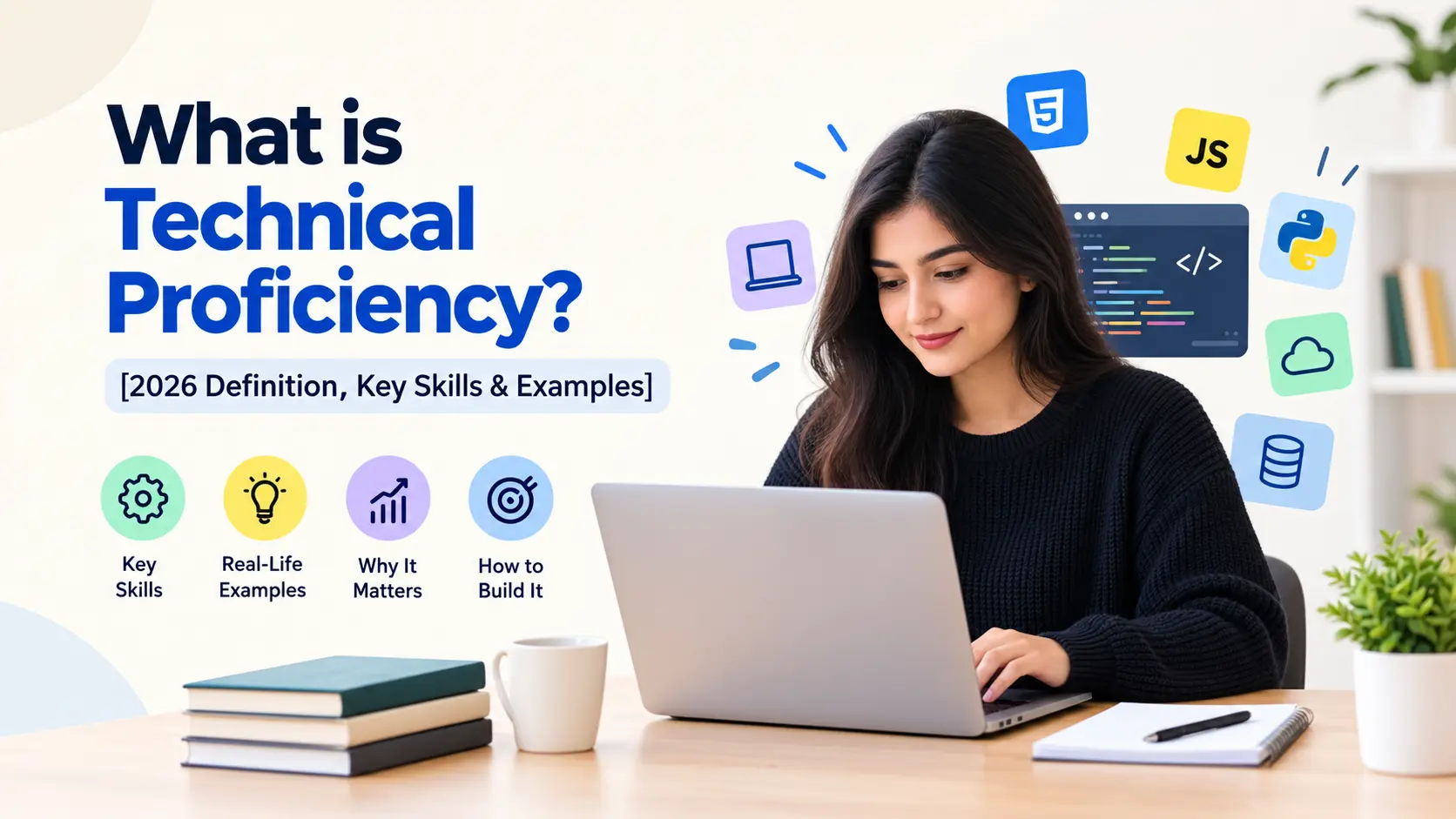
Table of Contents ▼
Quick Answer
This article explains technical proficiency, its key pillars, real-world examples, proficiency levels, assessment methods, employee training strategies, and how to effectively showcase technical proficiency on a resume.
Key Takeaways
- Technical proficiency means applying technical knowledge effectively in real-world situations.
- It combines practical skills, problem-solving, accuracy, speed, and adaptability.
- Organizations can develop proficiency through hands-on practice, simulations, and competency assessments.
- Technical proficiency can strengthen job performance and career opportunities.
- Professionals should showcase technical skills with specific tools, actions, and measurable results.
In modern organizations, digital transformation, artificial intelligence, and evolving learning management systems have fundamentally transformed how workplace capabilities are defined and measured. While foundational academic knowledge provides conceptual awareness, employers, instructional designers, and enterprise leaders prioritize technical proficiency—the practical ability to execute real-world tasks efficiently using specialized tools and workflows.
Whether you are evaluating job candidates, preparing a resume, or building an enterprise employee training curriculum, understanding the anatomy of technical proficiency is essential for driving operational excellence and measurable learning outcomes.
What is Technical Proficiency? (Clear Definition)
Technical proficiency is the demonstrated, practical ability to effectively apply specialized knowledge, software applications, digital tools, and operational methodologies to complete workplace tasks, solve complex technical challenges, and drive measurable performance outcomes within a specific professional domain.
Unlike general theoretical knowledge, technical proficiency requires hands-on execution. A learner may understand the concept of digital instruction theoretically, but demonstrating technical proficiency means actively configuring SCORM-compliant modules, scripting automated email sequences in Kajabi, or architecting a multi-tenant cloud LMS without friction.
The 4 Pillars of True Technical Proficiency
- Procedural Fluency: Understanding the step-by-step operating procedures required to navigate complex software and mechanical systems.
- Troubleshooting & Problem Solving: Diagnosing errors, unexpected system crashes, or integration failures independently without escalating every minor hurdle.
- Speed & Cognitive Efficiency: Executing tasks with muscle memory and structured workflows, minimizing turnaround time while maintaining zero-defect output.
- Adaptive Integration: The agility to migrate skills smoothly when software updates, new APIs are deployed, or organizational tech stacks evolve.
Technical Proficiency vs. Hard Skills vs. Soft Skills
Understanding how technical proficiency fits into holistic professional capability clarifies organizational hiring rubrics and instructional design roadmaps.
| Dimension | Soft Skills | Hard Skills | Technical Proficiency |
|---|---|---|---|
| Core Focus | Interpersonal and emotional intelligence | Teachable knowledge and subject expertise | Practical execution speed, accuracy, and tool mastery |
| Examples | Empathy, active listening, negotiation | Accounting principles, contract law, biology | Python scripting, Docebo LMS administration, CAD modeling |
| Measurement Method | 360-degree peer feedback, behavioral reviews | Standardized exams, degree certifications | Scenario-based simulations, technical skill tests, project deliveries |
| Training Approach | Coaching, roleplay, mentoring | Textbooks, video lectures, seminars | Interactive labs, sandbox environments, microlearning simulations |
15+ High-Demand Technical Proficiency Examples for 2026
Modern technical proficiencies span multiple functional business domains. Below are key technical proficiencies actively sought across corporate, edtech, and engineering sectors:
1. E-Learning & Instructional Technology
- **LMS Administration:** Configuring user permissions, SCORM/xAPI packages, automated certificates, and compliance reporting in platforms like Docebo, Canvas, Moodle, and TalentLMS.
- Course Platform Architecture: Building end-to-end sales funnels, community hubs, drip schedules, and checkout integrations in Kajabi, Skool, and Thinkific.
- Interactive Course Authoring: Developing responsive, branch-logic learning simulations in Articulate 360 (Storyline/Rise), Adobe Captivate, and Camtasia.
2. Cloud Infrastructure & Enterprise Systems
- Cloud Computing & Virtualization: Deploying secure compute, storage, and networking instances across AWS, Microsoft Azure, and Google Cloud Platform (GCP).
- Database & Data Management: Writing optimized SQL queries, managing relational schemas in PostgreSQL/MySQL, and managing cloud storage buckets.
- Enterprise ERP/CRM Navigation: Administering customer databases, pipeline stages, and automations within Salesforce, HubSpot, and Microsoft Dynamics 365.
3. Data Analytics & Business Intelligence
- Data Visualization: Translating raw operational datasets into executive dashboards using Tableau, Microsoft Power BI, and Google Looker Studio.
- Statistical Computing: Conducting predictive analysis and statistical regression using Python (Pandas/NumPy) or R.
- Learning Analytics: Tracking learner drop-off points, quiz attempt distributions, and competency retention rates.
4. Cybersecurity & Digital Governance
- Information Security Compliance: Enforcing SOC 2 Type II controls, ISO 27001 standards, and role-based access control (RBAC).
- Data Privacy Compliance: Implementing GDPR, CCPA/CPRA, and FERPA-compliant user consent and data retention workflows.
How Organizations Build & Assess Technical Proficiency
Building genuine technical proficiency requires moving away from passive classroom slide presentations. Research consistently demonstrates that passive video watching produces less than 20% knowledge retention after 30 days.
To build deep operational proficiency, leading corporate training teams utilize a 3-stage instructional design methodology:
Stage 1: Declarative Knowledge & Demonstration
Learners are introduced to the tool architecture, underlying principles, and standard operating procedures (SOPs) through concise microlearning modules and recorded screen walk-throughs.
Stage 2: Sandboxed Scenario-Based Practice
Rather than memorizing abstract menus, learners are placed in simulated sandbox environments where they must complete authentic workplace tasks—such as resolving a broken API payload, configuring an onboarding cohort in an LMS, or reconciling a ledger balance.
Stage 3: Competency-Based Verification
Proficiency is verified through timed performance challenges and capstone deliverables evaluated against clear rubrics. At TheEduAssist custom e-learning design team, we engineer interactive scenario-based courses that transform passive employees into technically proficient operators.
How to Showcase Technical Proficiency on a Resume
When job candidates and professionals list technical skills on a resume or CV, generic bullet points like “Proficient in Microsoft Excel” fail to convince hiring managers. Instead, frame technical proficiency using the Action-Tool-Outcome Formula:
- ❌ Weak: “Experienced in Kajabi and LMS management.”
- ✅ Strong: “Architected 12 modular Kajabi academies with automated Zapier-to-HubSpot syncs, reducing student onboarding drop-off by 34%.”
- ❌ Weak: “Good technical proficiency in SQL.”
- ✅ Strong: “Wrote automated PostgreSQL queries and Power BI pipelines processing 250,000+ learner activity records for weekly executive reporting.”
Frequently Asked Questions
What is the difference between technical skills and technical proficiency?
A technical skill refers to the specific category of capability (for example, “Python programming” or “Instructional Design”). Technical proficiency measures the depth, speed, autonomy, and accuracy with which an individual executes that skill in live professional environments.
What are the main levels of technical proficiency?
Proficiency is typically categorized into four progressive tiers:
- Fundamental / Beginner: Understands terminology, performs basic tasks with step-by-step guidance.
- Intermediate: Performs standard operational workflows independently, troubleshoots common errors.
- Advanced: Solves complex, non-routine problems, optimizes performance, and mentors others.
- Expert / Master: Architects new technical systems, establishes enterprise governance, and leads organizational innovation.
How can companies train employees on new technical proficiencies faster?
By implementing modular microlearning, interactive software simulations, real-world sandboxes, and continuous performance support job aids. Explore our LMS implementation and migration services to deploy rapid upskilling architectures across global teams.
Can non-technical roles require technical proficiency?custom e-learning design team
Yes. Modern marketers require proficiency in marketing automation and CRM analytics; HR professionals require proficiency in HRIS platforms; and educators require proficiency in digital authoring software and learning management systems.
How does TheEduAssist help organizations scale technical proficiency?
TheEduAssist designs custom interactive e-learning modules, high-retention microlearning courses, and LMS onboarding architectures tailored to corporate teams, course creators, and educational institutions worldwide. Book a free 24–48 hour training audit to evaluate your digital learning strategy today.
Sources & References
Frequently Asked Questions
QWhat is the difference between technical skills and technical proficiency?
A technical skill refers to the specific category of capability (for example, "Python programming" or "Instructional Design"). Technical proficiency measures the depth, speed, autonomy, and accuracy with which an individual executes that skill in live professional environments.
QWhat are the main levels of technical proficiency?
Proficiency is typically categorized into four progressive tiers:1. **Fundamental / Beginner:** Understands terminology, performs basic tasks with step-by-step guidance. 2. **Intermediate:** Performs standard operational workflows independently, troubleshoots common errors. 3. **Advanced:** Solves complex, non-routine problems, optimizes performance, and mentors others. 4. **Expert / Master:** Architects new technical systems, establishes enterprise governance, and leads organizational innovation.
QHow can companies train employees on new technical proficiencies faster?
By implementing modular microlearning, interactive software simulations, real-world sandboxes, and continuous performance support job aids. Explore our [LMS implementation and migration services](/services/lms-implementation-migration/) to deploy rapid upskilling architectures across global teams.
QCan non-technical roles require technical proficiency?custom e-learning design team
Yes. Modern marketers require proficiency in marketing automation and CRM analytics; HR professionals require proficiency in HRIS platforms; and educators require proficiency in digital authoring software and learning management systems.
QHow does TheEduAssist help organizations scale technical proficiency?
TheEduAssist designs custom interactive e-learning modules, high-retention microlearning courses, and LMS onboarding architectures tailored to corporate teams, course creators, and educational institutions worldwide. [Book a free 24–48 hour training audit](/book-free-audit/) to evaluate your digital learning strategy today.