Thinkific Student Engagement: 20 Proven Ways to Increase Course Completion
Struggling with silent student dropouts on Thinkific? Discover 20 proven strategies to boost course completion rates, improve retention, and keep learners active.
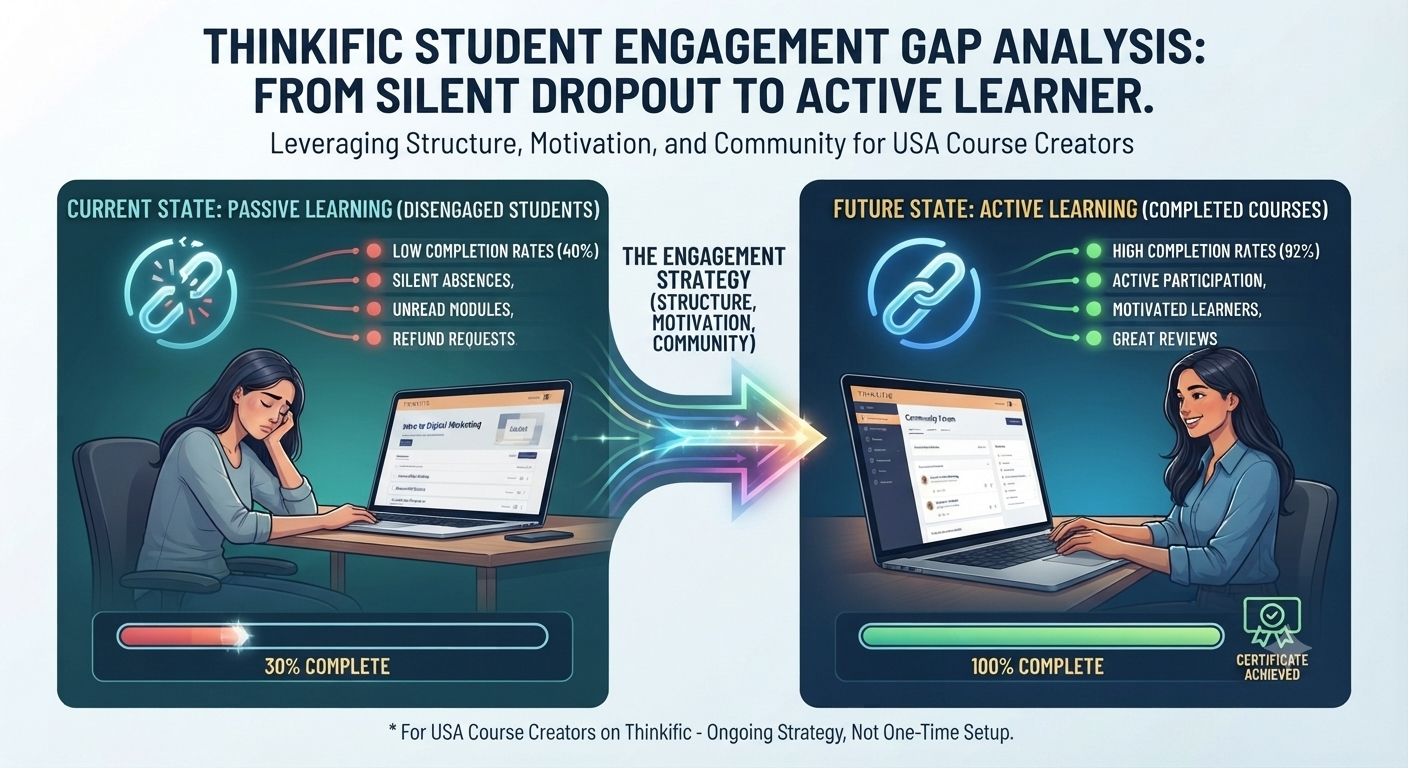
Table of Contents ▼
Quick Answer
Core Focus: Practical strategy guide for online course creators, coaches, and training academies on Thinkific facing low completion and student dropouts. Key Engagement Pillars: Onboarding & Design: Establish clear welcome roadmaps, microlearning chunks, and progress tracking indicators. Interaction & Community: Integrate interactive quizzes, live Q&A sessions, gamification (badges/points), and peer study groups. Content & Media: Use high-quality video/audio, storytelling, downloadable templates, and structured certificate rewards. Technical & Data Optimization: Implement automated reminder sequences, behavior segmentation, tool integrations (CRM/HRIS), and analytics tracking. Business Outcome: Higher student completion rates lead to lower refund requests, better platform reviews, and increased repeat course sales.
Online learning has grown fast across the USA, and Thinkific remains one of the most popular platforms for creators, coaches, and training businesses. Yet many course owners face the same problem: students sign up, watch a lesson or two, and then quietly disappear. This drop in activity hurts course completion rates and limits the impact of your content.
The good news is that Thinkific student engagement can be improved with the right strategy. In this article, we will walk through 20 proven ways to keep learners active, motivated, and moving toward the finish line. Whether you run a small coaching program or a large training academy, these tips will help you build a course experience that people actually want to complete.
Why Student Engagement Matters on Thinkific
Before jumping into the list, it helps to understand why engagement is so important. When learners stay engaged, they finish more lessons, leave better reviews, and are more likely to buy future courses. On the other hand, low engagement leads to refund requests and a damaged reputation.
Course creators in the USA and beyond often assume that great content alone will keep students hooked. In reality, structure, motivation, and community play an equally large role. That is why Thinkific student engagement should be treated as an ongoing strategy rather than a one-time setup.
20 Proven Ways to Boost Thinkific Student Engagement
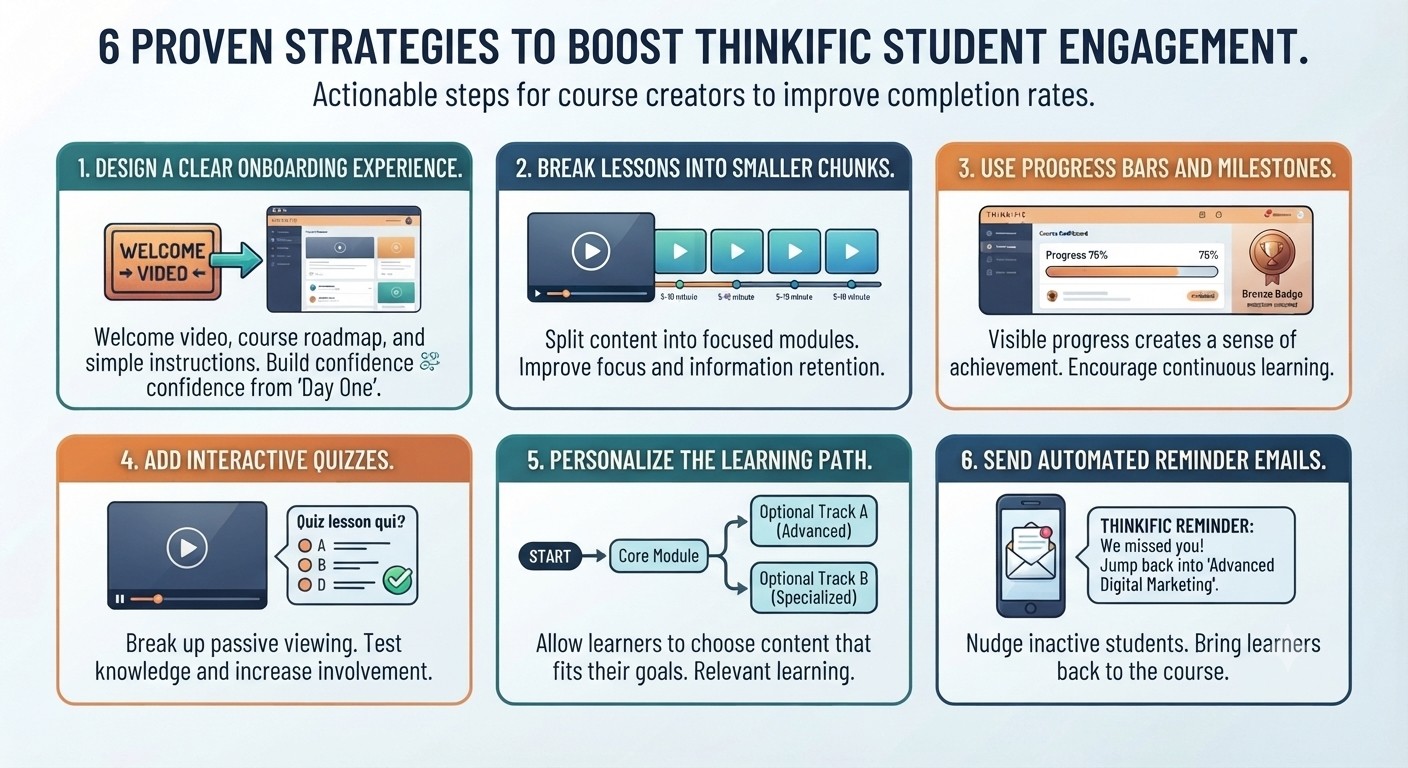
1. Design a Clear Onboarding Experience
The first few minutes inside your course set the tone for everything that follows. Give students a short welcome video, a simple course roadmap, and clear instructions on what to do first. As a result, learners feel confident instead of confused.
2. Break Lessons Into Smaller Chunks
Long, dense lessons often cause learners to lose focus. Instead, split content into short modules of five to ten minutes. If you want to refine how your content retains student focus, review our e-learning design mistakes study to eliminate common layout traps that reduce learner retention rates.
3. Use Progress Bars and Milestones
Thinkific offers built-in progress tracking. Therefore, make sure learners can always see how far they have come and how much is left. Visible progress creates a small sense of achievement that encourages people to keep going.
4. Add Interactive Quizzes
Quizzes are not just for testing knowledge; they break up passive video watching and give learners a reason to stay alert. You can explore practical techniques in our guide on how to transform passive lessons into interactive LearnDash courses to craft better interactive checkpoints.
5. Personalise the Learning Path
Not every student needs the same journey. By offering optional tracks or bonus modules, you allow learners to choose content that fits their specific goals. To learn how to deliver tailored paths using modern tools, see our tutorial on Thinkific course creation and LMS management for 2026.
6. Send Automated Reminder Emails
Life gets busy, and learners often forget to log back in. Set up automated email sequences inside Thinkific to nudge students who have gone quiet. A simple reminder can bring many inactive users back into the course.
7. Build a Community Space
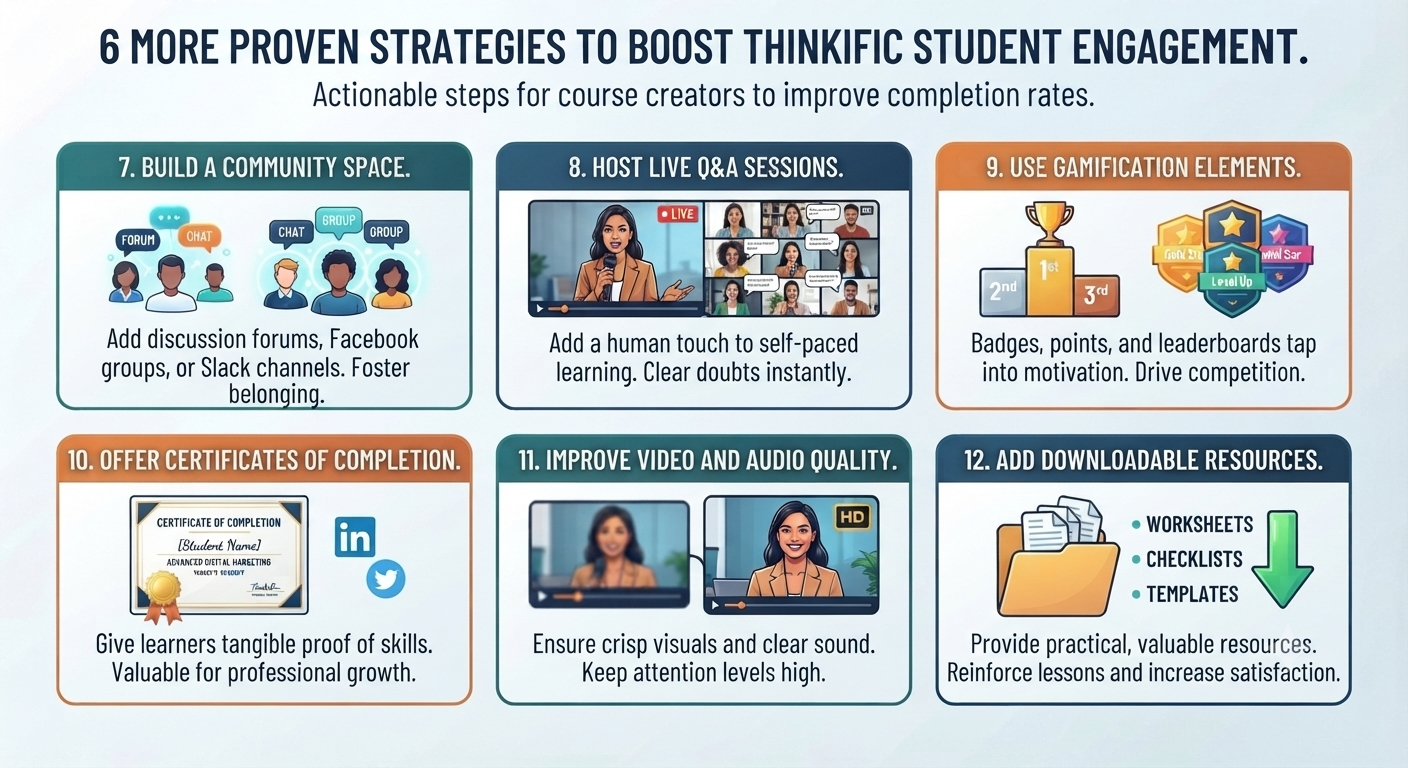
People stay engaged when they feel part of something bigger. Adding a discussion forum, Facebook group, or dedicated community platform gives students a place to ask questions and share progress. For creators comparing social learning tools, our Skool vs LearnWorlds comparison breaks down how community hubs impact student retention.
8. Host Live Q and A Sessions
Live sessions add a human touch to self-paced learning. During these calls, instructors can clear doubts instantly and build trust. To structure your webinars effectively, check out our guide on how to create engaging video seminars on Spotlightr step-by-step.
9. Use Gamification Elements
Badges, points, and leaderboards tap into natural motivation. When learners see their name climb a leaderboard, they often push themselves to complete more lessons. Small rewards lead to big engagement gains.
10. Offer Certificates of Completion
A certificate gives learners something tangible to show for their effort. This is especially valuable for professionals who want proof of new skills for their resume or LinkedIn profile. If you build specialized modules, take inspiration from our walkthrough on how to build a cybersecurity curriculum design course.
11. Improve Video and Audio Quality
Poor video or audio quality can quietly push students away. Clear visuals and crisp sound keep attention levels high throughout each lesson. Check out our strategies for creating e-learning videos for students and teachers who actually love the content to elevate your visual standards.
12. Add Downloadable Resources
Worksheets, checklists, and templates give learners practical tools outside the platform. If you have legacy training files, read our guide on how to turn PDFs into high-converting courses that sell to transform static documents into interactive workbooks.
13. Track Data and Learning Analytics
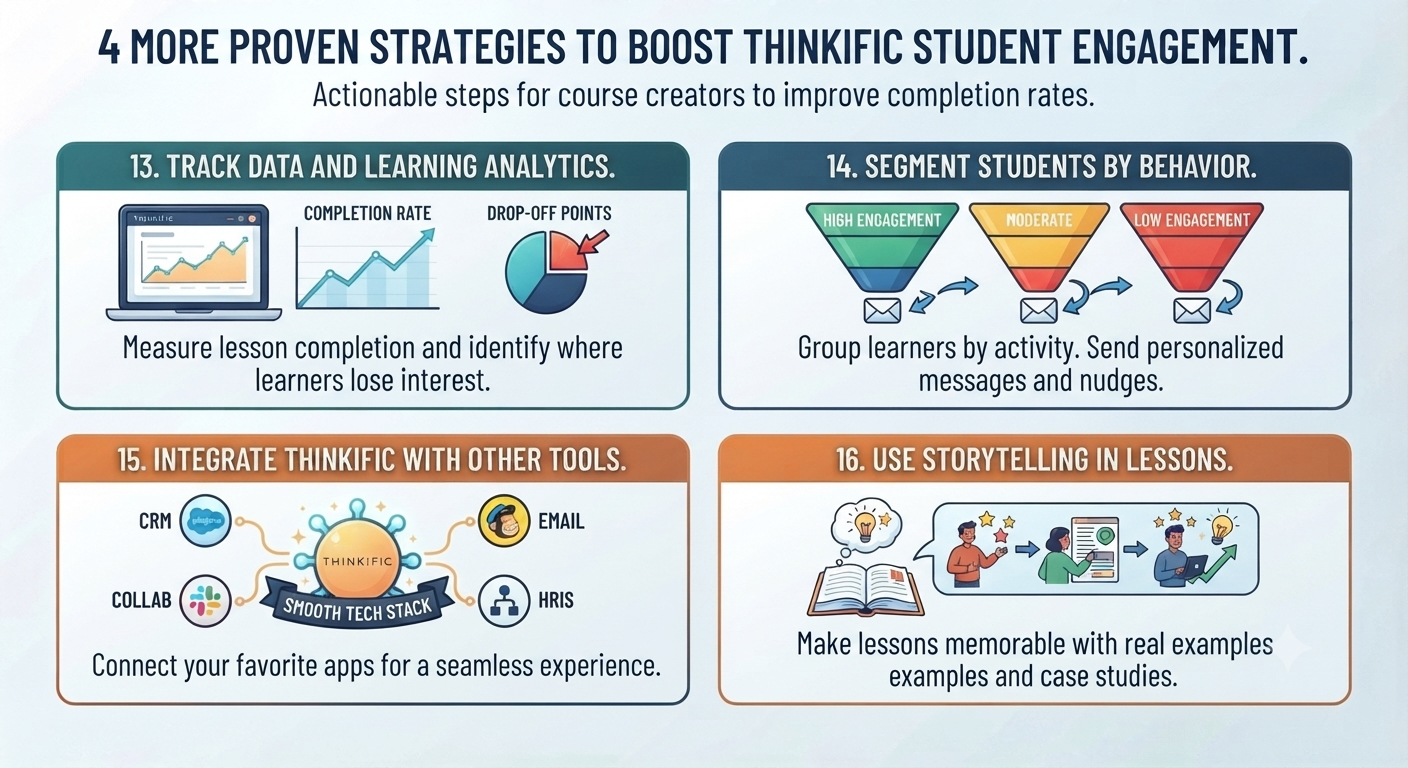
You cannot improve what you do not measure. Thinkific provides analytics on lesson completion and drop-off points, and pairing this with a deeper measurement approach, similar to the framework in our corporate training ROI calculator guide and proven tracking metrics by following our 7 thrilling ways to measure training ROI helps you understand exactly where learners lose interest.
14. Segment Students by Behavior
Not all students behave the same way. Some finish quickly, while others need extra encouragement. By segmenting learners based on activity, you can send targeted messages that speak directly to their situation.
15. Integrate Thinkific With Other Tools
A smooth tech stack removes friction for both students and instructors. If you use external marketing or sales funnels, review our guide on Systeme.io funnel creation with 7 proven steps or explore building landing pages with our GHL e-learning funnel guide.
16. Use Storytelling in Lessons
Facts and instructions are useful, but stories make lessons memorable. Connect emotionally with your audience by learning how to create engaging educational content for online platforms in 2026.
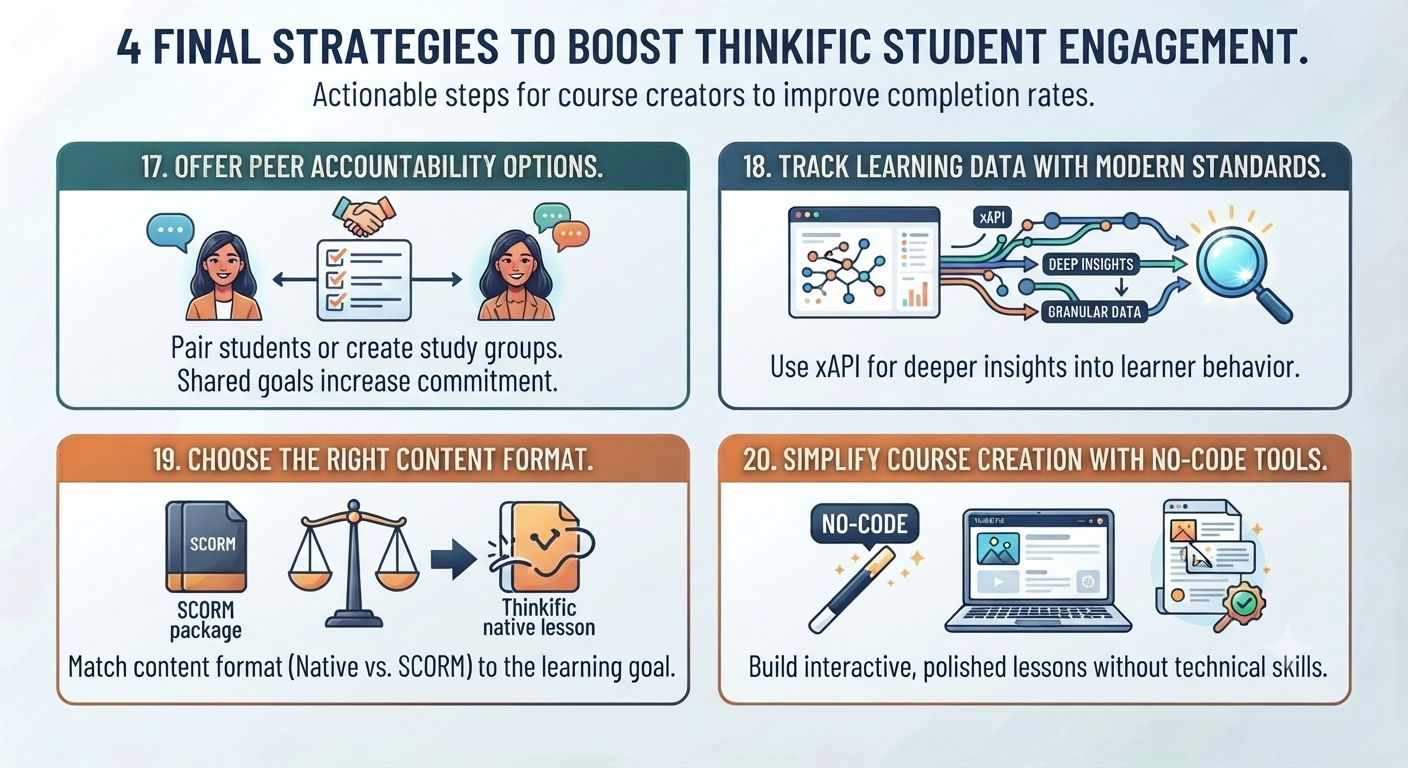
17. Offer Peer Accountability Options
Pairing students together or creating small study groups adds accountability. When someone else is expecting progress updates, learners are far less likely to abandon the course.
18. Track Learning Data With AI & Modern Standards
For creators who want deeper insight into learner behavior, leveraging AI analytics helps identify skill drop-offs fast. Explore our insights on AI insights powering skills-based learning in 2026 to see how modern standards guide retention decisions.
19. Optimize Course Content for High Completion Rates
Some content works better as standalone modules, while other lessons fit into comprehensive LMS structures. If you want to make sure your audience finishes your modules, read our post on thrilling Thinkific courses that US learners actually complete.
20. Simplify Course Asset Design
Reducing design friction on the creator’s side improves the final product for students. If you need clean graphics and slide decks for your lessons, explore our recommendations for Canva development and design support that sells.
Bringing It All Together
Improving Thinkific student engagement is not about applying one single trick. Instead, it is about layering small improvements across onboarding, content design, communication, and community. When these elements work together, course completion rates naturally rise.
Many course creators also compare platforms before deciding where to scale their next program. If you are evaluating options across the market, check our top recommendations in the 10 best learning management systems compared or read our direct LearnWorlds vs Thinkific comparison. If you are looking to monetize your authority directly, follow our guide on how to sell online courses that actually convert.
For a broader view of platform strategy, our guide on LXP versus LMS and which one your business needs offers useful context for anyone rethinking their learning technology stack.
Frequently Asked Questions
What is the best Thinkific alternative for boosting student course completion rates?
Several platforms offer strong engagement features, including LearnWorlds, Teachable, and Kajabi. If you want to compare feature sets directly, read our breakdown of LearnWorlds vs Kajabi or see how LearnWorlds works for corporate training.
Thinkific vs Teachable: which platform offers better student engagement tools?
Thinkific tends to offer stronger built-in progress tracking and quiz features, while Teachable focuses heavily on simplicity. If you want to compare broader market tools, review our guide on Udemy made simple for learners and instructors.
Which online course platform should I choose to increase completion rates on Thinkific?
If you already use Thinkific, focus on optimizing what the platform offers before switching. Follow the strategies in our guide on building thrilling corporate training that works to maximize student interaction.
How do I convert my passive slide decks into interactive Thinkific content?
Converting static slide presentations into structured learning programs is a great way to re-engage quiet students. Learn how to execute this step-by-step with our guide on moving from PPT to profitable leadership courses that make an impact.
Which are the best Thinkific plugins for enhancing student interaction and course completion?
Popular options include tools for email automation, gamification, and advanced analytics. Many creators also integrate third party community platforms to keep learners connected between lessons.
References
Need Help Building or Scaling Your Online Learning Program?
Whether you are launching an academy on Kajabi, modernizing corporate LMS modules, or converting raw expertise into accredited curriculum, our senior instructional designers provide a complimentary architecture evaluation.