The Complete 2026 Roadmap for Women’s Health eLearning Funnels Using GHL
Learn how to build high-converting Women’s Health eLearning funnels with GoHighLevel (GHL) in 2026. Step-by-step roadmap for coaches and creators targeting women’s wellness, hormones, and holistic health.
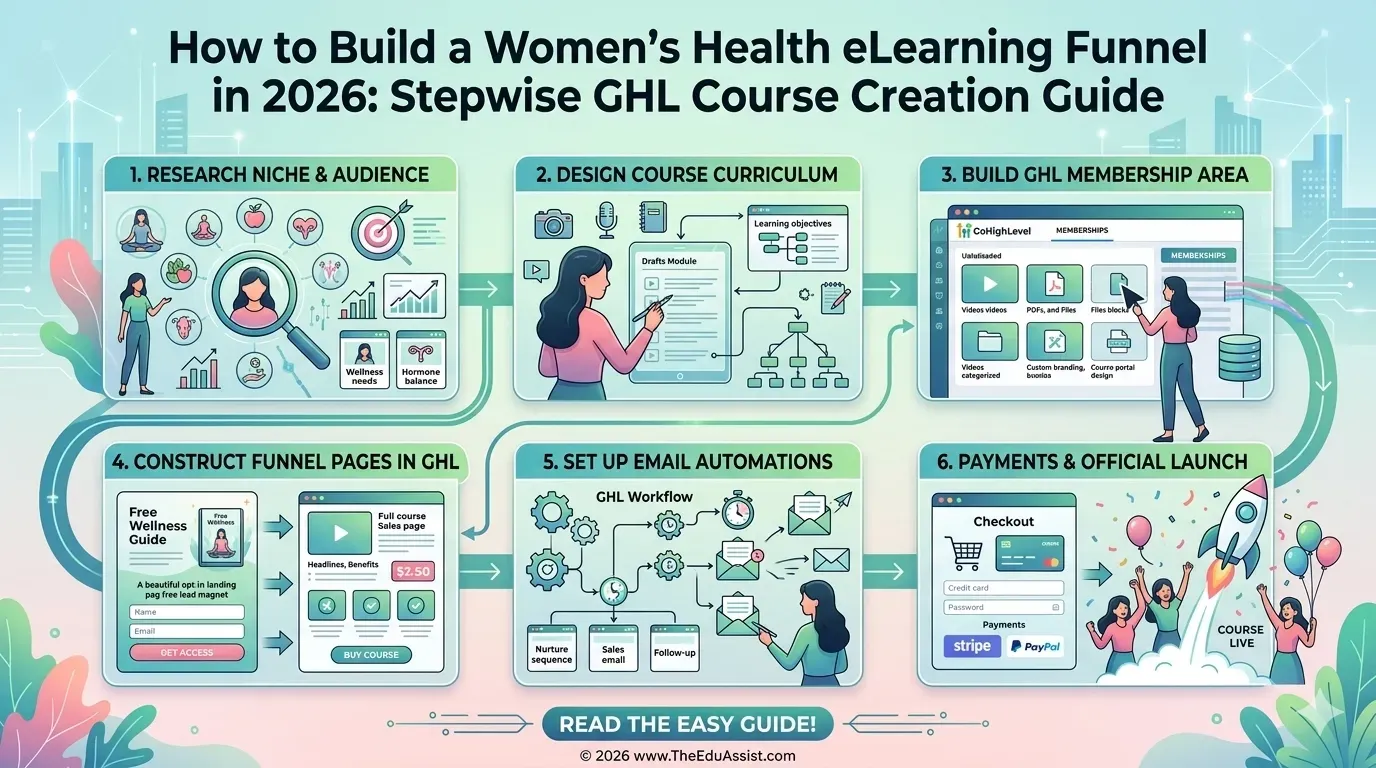
Table of Contents ▼
Quick Answer
This guide explains how women’s health coaches, practitioners, and creators can build scalable eLearning funnels with GoHighLevel. It covers topic selection, course structure, microlearning, Canva learning assets, funnel creation, automated follow-ups, in-course upsells, and premium coaching pathways. The approach focuses on educating learners first, building trust, and then converting engaged learners into premium clients.
Key Takeaways
- Education should come before conversion. Build trust through useful, learner-centered content before presenting premium offers.
- Microlearning can make health education more engaging. Short lessons, checklists, trackers, and practical activities create a more manageable learning experience.
- GHL can connect the entire funnel. Courses, funnels, automations, follow-ups, calendars, and upsells can work together as one conversion system.
Women’s health education is rapidly becoming one of the strongest niches in eLearning. Topics like hormone balance, perimenopause, fat loss, detox, and wellness systems are drawing major interest from women seeking trustworthy guidance online.
For health coaches, practitioners, and creators, this creates a major opportunity: Build educational programs that both help learners and generate premium client leads.
However, many wellness businesses struggle with:
- Disconnected funnels
- Generic course content
- Poor learner engagement
- Weak automations
- No upsell pathway into premium services
In cities like Houston, Dallas, San Antonio, Austin, and Fort Worth, creators are increasingly looking for systems that turn expertise into scalable online education.
That’s where a properly built women’s health eLearning funnel becomes powerful.
Instead of selling random PDFs or webinars, you create an integrated ecosystem using:
- Structured course creation
- Funnel building
- Automations
- Lead nurturing
- High-ticket conversion systems
This guide explains how to do it step-by-step using GoHighLevel.
Why Most Women’s Health Funnels Underperform
Many creators launch funnels that focus only on marketing. They build:
- Landing pages
- Ads
- Checkout pages
But forget the learning experience after purchase. That creates problems:
- Low completion rates
- Weak trust building
- Refund requests
- Low upsell conversions
In health education, trust is critical.
According to research on digital health literacy in women-focused online education, structured learning environments can be an effective method for delivering complex health information when content is learner-centered and accessible.
This means course quality directly affects conversion outcomes.
The Smart Funnel Model: Education First, Conversion Second
The highest-performing wellness funnels in 2026 often follow this sequence:
- Attract interest
- Deliver helpful microlearning
- Build trust
- Show results pathway
- Offer premium support
This aligns with modern eLearning trends 2026, where value-first systems outperform aggressive selling.
Step 1: Choose a High-Demand Course Topic
Strong women’s health funnel topics include:
- Hormone balance in perimenopause
- Peptides education for body composition support
- Detox systems for sustainable wellness
- Inflammation reduction strategies
- Metabolic health for women, 35+
Your topic should solve a specific pain point.
Avoid broad promises like: “Get healthier.”
Use precise outcomes like: “Build a 6-week hormone reset routine for busy women over 35.”
Step 2: Build a Short, Actionable Course Structure
Short programs convert better than bloated courses.
Recommended structure:
- Module 1: Root cause education
- Module 2: Daily systems & habits
- Module 3: Action plan implementation
For an 8-week program, use:
- 3 core modules
- Weekly check-ins
- Bite-sized lessons
- Progress milestones
This is where instructional design matters.
Step 3: Create 5-Minute Lessons Instead of Long Lectures
Busy women want clarity, not complexity.
Use:
- 5-minute video lessons
- One idea per lesson
- Visual summaries
- Checklists
This microlearning format improves completion rates and perceived value.
Step 4: Use Canva for Branded Learning Assets
Your course should feel premium.
Use Canva for:
- Branded slide decks
- Symptom trackers
- Hormone planners
- Detox checklists
- Progress journals
Strong visuals improve learning retention and trust.
Step 5: Build the Funnel in GoHighLevel
GoHighLevel is widely used for creators because it combines:
- Funnels
- Email marketing
- SMS automations
- Calendars
- Memberships
- Pipelines
According to GoHighLevel’s support documentation, creators can launch courses using membership/course tools connected directly to automations and offers.
This makes it ideal for a women’s health education funnel.
Step 6: Funnel Flow That Converts
Recommended system:
Front-End Funnel
- Free lead magnet
- Webinar or mini-course
- Low-ticket starter program
- Upsell into premium coaching
Mid-Funnel Trust Builders
- Educational emails
- Case studies
- Quick wins
- Client stories
Back-End Offer
- Premium coaching
- Diagnostics program
- Membership support
Step 7: Add Smart Upsells Inside the Course
The course itself should generate leads.
Examples:
- “Book your hormone strategy session”
- “Apply for personalized coaching”
- “Upgrade to premium accountability program”
Because learners already trust your teaching, in-course upsells often outperform cold sales pages.
Step 8: Automate Follow-Up
Use GHL automations for:
- Incomplete lesson reminders
- Celebration milestones
- Consultation invitations
- Abandoned checkout recovery
- Reactivation campaigns
This reduces manual work and improves revenue consistency.
Cost Reality Check: Building a Professional Funnel
- Funnel strategy: $2,000 – $6,000
- Course content development: $2,000 – $8,000
- Canva assets: $100 – $800
- GHL subscription: Monthly plan based
- Automation setup: $1,000 – $5,000
DIY is possible, but professional consulting services often accelerate launch speed and results.
Unique Perspective: Health Funnels Must Educate Before They Sell
Generic funnel advice doesn’t work well in wellness.
Women making health decisions want:
- Clarity
- Evidence
- Empathy
- Structure
- Credibility
That’s why the best funnels combine:
- Custom eLearning
- Trust-building nurture systems
- Premium conversion pathways
This is especially true in health niches where misinformation is common.
Final Thoughts
If you’re a women’s health creator in the USA, 2026 is an ideal time to turn your expertise into a scalable education business.
By combining:
- Instructional design
- Course creation
- GHL automations
- Premium funnel systems
- Learner-centered content development
you can build a funnel that both changes lives and grows revenue.
Platforms like theeduassist.com support creators with eLearning systems, content development, and launch consulting services for modern course businesses.
Authored By: Sofia Arif (https://www.linkedin.com/in/sofia-arif-47b5a0197/)
Sources & References
Frequently Asked Questions
QWhy is GoHighLevel good for women’s health funnels?
GoHighLevel combines funnels, automations, calendars, memberships, and CRM tools in one system.
QHow long should a wellness course be?
Short structured programs (4–8 weeks) usually perform better than oversized courses.
QWhat content converts best in health education?
Microlearning lessons, checklists, trackers, practical frameworks, and clear next steps.
QShould I sell coaching inside the course?
Yes. Strategic in-course upsells can convert highly engaged learners into premium clients.
QHow can TheEduAssist help build this system?
Through [++theeduassist.com++](https://www.theeduassist.com), creators can get help with custom eLearning, funnel builds, content development, curriculum design, and consulting services.