
Government Workforce Training: How LMS Platforms Support Public Sector Learning and Development
Discover how learning management systems support government workforce training through compliance tracking, employee development, consistent learning programmes, and flexible access to training resources.
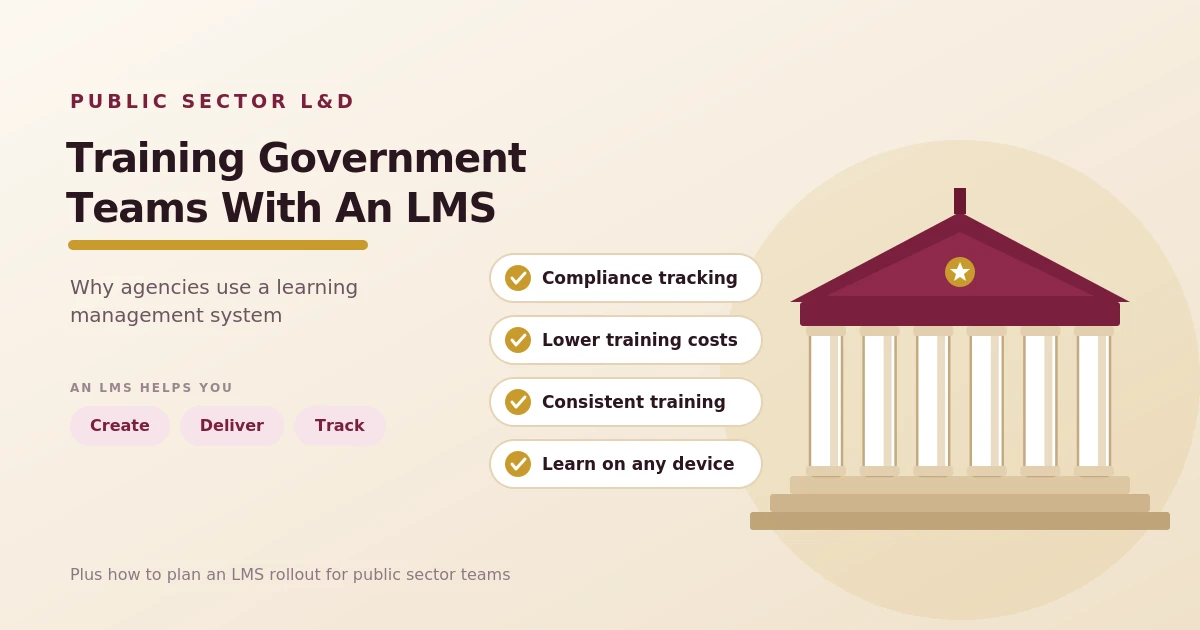
Table of Contents ▼
Quick Answer
This article explores how learning management systems support learning and development in government agencies. It explains the benefits of LMS platforms, including simplified compliance tracking, reduced training costs, consistent learning across departments, and flexible employee access. It also discusses the importance of public sector workforce development and outlines practical steps for implementing an LMS in a government organization.
Key Takeaways
- They help agencies organize courses, deliver learning materials, and monitor employee progress.
- Automated tracking helps organizations monitor mandatory training, certifications, and renewal requirements.
- Training strengthens employee capabilities, prepares future leaders, and helps preserve institutional knowledge.
- 1. Government agencies should assess skills gaps, select suitable software, organize learning resources, and evaluate training outcomes.
What’s the purpose of LMS platforms?
A learning management system or as often referred to as LMS, is a software application that is used by organizations for creating, managing, delivering and tracking educational courses or development programs for their employees. LMS uses artificial intelligence and other smart technologies to evaluate an employee’s training needs both individually and organizationally for maximum productivity.
Using LMS for Learning and Development
As organizations grow and technology advances, employees must be trained and ready to adapt. As such, learning solutions are needed that fit how people work, focus on flexibility and engagement, and deliver real-world impact.
This is where an LMS comes in. Rather than just being a storage for training materials, an LMS helps many companies to deliver meaningful learning experiences, personalise development paths, and track progress with real-time insights.
LMS and its need in Government Workforce Training
Now, just like in normal companies and organizations, government agencies also equip themselves with an LMS to ensure that employees are up to date with compliance requirements, policies, and other job-related skills.
Using a government LMS brings in multiple benefits, some of which are:
Simplified Compliance and Training Tracking
Automatic tracking of training completions, certifications, and renewals to stay up to date with regulatory demands.
Reduced Training Costs and Administrative Time
Eliminates the need to travel or go to any seminar or have the need for any printed materials. Training material can be repurposed and updated, keeping the training relevant.
Consistent Training Across Government Agencies
Training suited for a team of 100 or more employees. Consistent training across every federal agency and region.
Flexible and Accessible Employee Learning
Employees can train at any time, in any place, and on any device. LMS allows flexibility for easy learner training.
Importance of Public Sector Learning and Development
Training and development help public sector employees strengthen their workplace skills while supporting the wider goals of government agencies. These programmes build capabilities, especially in economies shifting from state-owned systems towards privatisation, where government workers may need to collaborate with private businesses and support the development of a competitive market. They also prepare employees to take on leadership roles when senior staff leave or retire, helping agencies maintain continuity and preserve institutional knowledge. In addition, training encourages innovation by giving employees and managers the skills to approach workplace challenges flexibly, work together, and develop practical solutions. Finally, standardized training programmes create a shared knowledge base across an organization, helping new employees understand their responsibilities and complete the training needed to perform their roles effectively.
How to Implement an LMS for Public Sector Workforce Training
Implementing an LMS in a government agency requires careful planning to ensure the platform meets employees’ training needs and organizational goals. Start by identifying the skills gaps across departments and the types of training employees need, such as compliance, leadership, technical skills, or professional development. Next, choose an LMS that can support your workforce size, provide secure access to training materials, track employee progress, and generate reports. Once the platform is selected, organize existing training resources into courses and learning paths that employees can follow. You should also provide guidance to help employees and trainers become familiar with the system. Finally, monitor course participation, completion rates, and employee feedback to evaluate the effectiveness of the training and make improvements where needed.
Final Thoughts
An LMS can help government agencies make employee training more accessible, consistent, and easier to manage. From tracking compliance requirements to supporting professional development and preparing future leaders, it provides a structured way to build workforce skills. By choosing a platform that meets their needs and planning its implementation carefully, public sector organizations can support continuous learning and prepare employees to meet changing workplace demands.
Need Help Building or Scaling Your Online Learning Program?
Whether you are launching an academy on Kajabi, modernizing corporate LMS modules, or converting raw expertise into accredited curriculum, our senior instructional designers provide a complimentary architecture evaluation.
Sources & References
Frequently Asked Questions
QWhat features should a government LMS include?
A government LMS should include course management, employee progress tracking, compliance reporting, certification management, and customizable learning paths. Security, accessibility, reporting capabilities, and integration with existing government systems are also important considerations.
QCan an LMS support training across multiple government departments?
Yes. An LMS can deliver centralized training programmes to employees across different departments, offices, and regions. Administrators can assign courses based on job responsibilities while tracking participation and completion across the organization.
QHow does an LMS help government agencies measure training effectiveness?
An LMS provides reports on course enrollment, completion rates, assessment results, and learner participation. Agencies can use this information to identify training gaps, evaluate employee progress, and determine which programmes may need improvement.
