
From Physical Training to LMS Courses: How Government Agencies Can Modernize Employee Training
Explore how government agencies can transition from traditional in-person training to LMS-based courses, improve employee learning, and combine online education with practical instruction.
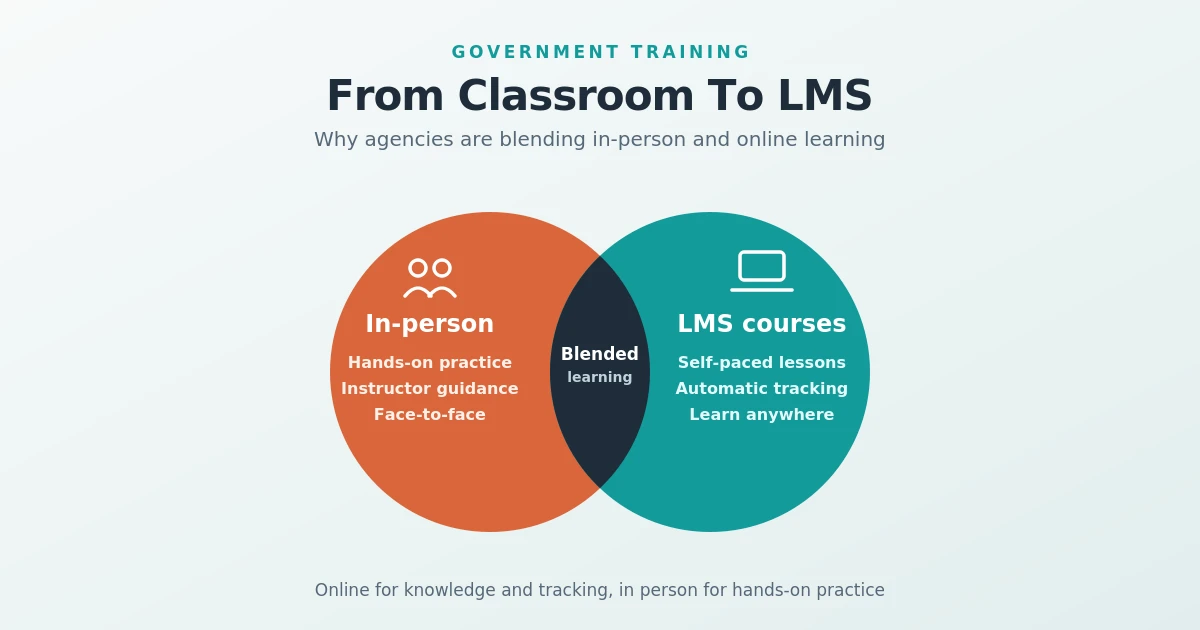
Table of Contents ▼
Quick Answer
This article compares traditional physical training with LMS-based learning in government agencies. It explains the benefits of online training, including greater accessibility, reduced administrative costs, consistent course delivery, and easier progress tracking. It also outlines the steps for transitioning existing training materials into online courses and explains how blended learning can combine digital lessons with practical, face-to-face instruction.
Key Takeaways
- Classroom sessions provide direct interaction and supervised practice, while LMS courses offer flexible access to digital learning materials.
- Agencies can distribute courses, standardize learning materials, and monitor employee progress across departments and locations
- Government organizations should assess training needs, choose a suitable LMS, adapt existing materials, and introduce the platform gradually.
- Combining online courses with workshops and practical instruction helps agencies support both theoretical knowledge and hands-on skills.
What Is Traditional Physical Training in the Government Sector?
Traditional physical training refers to the in-person learning activities that government employees attend, such as workshops, seminars, classroom sessions, or practical training programmes. These sessions are usually led by instructors who explain concepts, demonstrate procedures, and guide employees through different activities. Government agencies have traditionally relied on this approach to train employees in areas such as workplace safety, administrative procedures, leadership, technical skills, and regulatory compliance. It also gives employees opportunities to interact with trainers, ask questions, and learn directly from their colleagues.
Why Are Government Agencies Moving Towards Online Training?
As Government workplaces become more digitally connected, agencies are exploring online training to make employee development easier to organize and access. Traditional classroom sessions remain useful, but they may not always meet the needs of large or geographically dispersed workforces. Online training allows employees to access learning materials without having to travel to a training centre. They can complete lessons, watch recorded presentations, take assessments, and revisit course materials when needed. This can be particularly useful for agencies that need to train employees across multiple departments or locations.
Physical Training vs. LMS-Based Training: Key Differences
Both physical training and LMS-based learning can help government employees develop their skills, but they differ in how training is delivered and managed.
- Training location: Physical training usually requires employees to attend a classroom, workshop, or designated training centre. LMS-based courses can be accessed online from different locations, provided employees have the required devices and internet connection.
- Scheduling: Traditional sessions often follow a fixed timetable. Online courses can offer self-paced learning, allowing employees to complete lessons around their work responsibilities.
- Learning materials: In-person training may rely on presentations, printed documents, and demonstrations. An LMS can bring together videos, digital documents, quizzes, recorded sessions, and other learning resources.
- Progress tracking: Physical training attendance and completion may need to be recorded manually. An LMS can automatically track course activity, assessment results, and completion records.
- Practical experience: Classroom and field-based training allow employees to practise skills under an instructor’s supervision. Online courses can explain procedures and provide demonstrations, but some skills still require hands-on practice.
- Training management: Organizing repeated classroom sessions can require considerable coordination. An LMS allows agencies to distribute courses and manage training records through one platform.
The main distinction is that physical training focuses on face-to-face instruction, while LMS-based training uses digital tools to deliver and monitor learning.
Benefits of Moving Government Training Programs Online
Moving some employee training programmes online can help government agencies make learning more accessible and easier to manage. An LMS offers several advantages:
- Greater accessibility: Employees working in different departments, cities, or regions can access the same training materials without travelling to a central location.
- Reduced administrative costs: Online courses can reduce the need for repeated venue bookings, printed materials, and travel arrangements.
- Consistent training delivery: Agencies can provide standardized learning materials to employees across different offices, helping maintain consistent training standards.
- Easier progress tracking: Training managers can monitor course completion, assessment results, and employee participation through reports.
- Flexible learning schedules: Employees can complete self-paced lessons around their work responsibilities, depending on the course requirements.
- Simpler content updates: When policies, procedures, or regulations change, agencies can revise online materials and make updated information available to learners.
How to Transition from In-Person Training to LMS Courses
Moving from traditional training to an LMS requires more than uploading existing presentations and documents. Government agencies need to review their current programmes and decide how each subject can be delivered effectively online.
Here are some steps agencies can follow:
- Identify training requirements: Review existing training programmes and identify which courses can be delivered online. Consider employee responsibilities, required skills, and organizational training objectives.
- Choose a suitable LMS: Select a platform that can support the agency’s workforce size, security requirements, accessibility needs, reporting requirements, and training formats.
- Convert existing materials: Review classroom presentations, manuals, and training documents. Adapt suitable materials into digital lessons, videos, quizzes, and other interactive learning resources.
- Organize courses: Arrange learning materials into structured courses or modules so employees can follow a clear learning path.
- Train employees and instructors: Provide orientation sessions to help employees access courses and complete assessments. Trainers and administrators should also learn how to manage content and monitor progress.
- Launch a pilot programme: Start with a small group or one department before introducing the LMS across the entire organization. Collect feedback and identify technical or learning-related issues.
- Monitor and improve: Review completion rates, assessment results, and employee feedback. Use this information to improve course content and the overall training experience.
Can LMS Platforms Support Practical and Hands-On Training?
Yes, LMS platforms can support practical training by providing the theoretical knowledge and preparation employees need before performing tasks in real workplace settings. They can offer instructional videos, demonstrations, simulations, interactive exercises, and assessments that help employees understand procedures before practising them.
Combining Physical Training with Online Learning
Government agencies do not necessarily have to choose between physical training and LMS-based courses. They can combine both approaches through a blended learning model, which uses online materials alongside classroom sessions, workshops, demonstrations, and practical activities.
Final Thoughts
Moving from traditional physical training to LMS-based learning allows government agencies to make employee development more flexible, accessible, and easier to manage. Online courses can help departments distribute training materials, monitor employee progress, and provide consistent learning experiences across different locations. However, practical instruction and face-to-face interaction remain important for skills that require demonstrations or supervised experience. By combining LMS courses with in-person training where necessary, government agencies can create a more adaptable training system that supports continuous learning and workforce development.
Need Help Building or Scaling Your Online Learning Program?
Whether you are launching an academy on Kajabi, modernizing corporate LMS modules, or converting raw expertise into accredited curriculum, our senior instructional designers provide a complimentary architecture evaluation.
Sources & References
Frequently Asked Questions
QIs LMS-based training better than traditional government training?
Neither approach is better in every situation. LMS-based training is useful for distributing information, delivering standardized courses, and tracking employee progress. Traditional training is valuable when employees need direct instructor guidance, discussion, or supervised practical experience. Government agencies can choose the approach that best fits each training requirement.
QWhich government training programmes can be moved online?
Many programmes can be adapted for online delivery, including cybersecurity awareness, data protection, administrative procedures, workplace policies, regulatory compliance, and professional development. However, courses involving equipment operation, emergency response, or other practical skills may still require in-person instruction.
QHow can government agencies ensure employees complete online training?
Agencies can assign mandatory courses, establish completion deadlines, send automated reminders, and monitor participation through LMS reports. Quizzes and assessments can also help managers determine whether employees have understood the training material.
