Plan Your Online Course Today: A Step-by-Step Guide to Launching Before March 2027
Learn how to plan, create, test, and launch an online course by March 2027, from researching your audience to choosing a platform and preparing course materials.
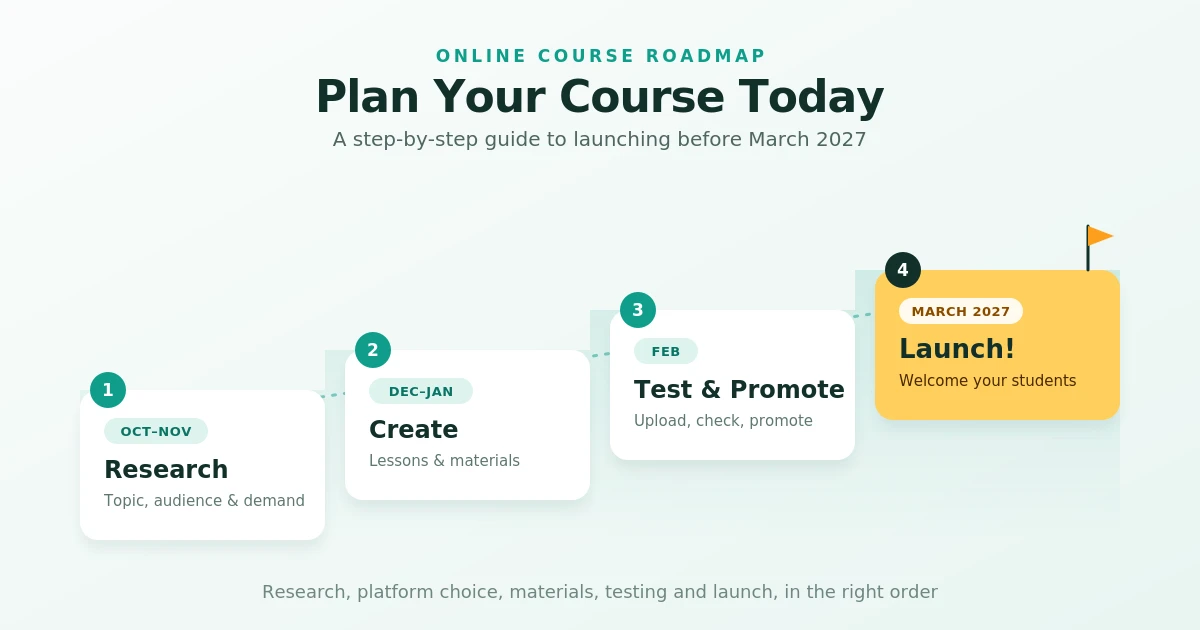
Table of Contents ▼
Quick Answer
This guide walks aspiring online course creators through the planning process for a March 2027 launch. It covers researching the course topic and audience, understanding customer needs, choosing the right course platform, preparing lessons and learning materials, testing the course experience, and creating a month-by-month launch timeline.
Key Takeaways
- Research your audience first to understand their problems, interests, and what they are willing to learn or invest in.
- Choose a course platform based on your needs, including content formats, student experience, payments, marketing, and analytics.
- Prepare and organize course materials such as videos, presentations, worksheets, quizzes, and downloadable resources before launch.
- Follow a realistic launch timeline by researching in October–November, creating content in December–January, testing and promoting in February, and launching in March 2027.
So you decide that you want to be an online course creator. Now that’s an exciting journey, but it’s also full of many questions… the main one being: Where should I start?
Like all adventurers, you first have to do your studying and figure out which path you want to choose and which one is right for you. And this guide is going to help you with that =.
Why does Early Planning Matter?
Before taking any step or making any decision, you first have to plan strategically. Behind every successful online course creator’s journey is good pre-planning. This means researching the audience you want to create for, what type of knowledge or content they want to learn, and what strengths and skills you have that you would like to put out there for others.
Researching in the beginning and learning about the community you want to enter is very important. Many creators tend to forget that, and then they wonder why their courses aren’t reaching the right people. This can lead to them spending more money on marketing tools and strategies to try to save their business, or eventually leave it entirely.
What Steps Should You Take?
Research the topic that suits your audience:
The first step is always to research your audience. Every online course creator needs to understand the community and audience they want to serve. Here are a couple of steps you can take to help in your initial research:
Start With Marketplace Research:
Before you start creating modules, videos, slides, and worksheets for your online courses, you have to first take some time to understand the marketplace. Research what people are already searching for, the questions they are asking, the problems they are trying to solve, and the results they are willing to invest in. Doing this research first can help you avoid spending weeks creating a course that doesn’t match what your audience actually wants.
Understand What Your Audience Wants:
It’s easy to assume that because you’re fluent in one subject, you already know what your audience needs. But this isn’t always the case, as what you think they need is not always what they are looking for. Instead of guessing, look at Google Searches, Reddit Communities, Facebook Groups, and other online forums. These conversations can give you a much clearer idea of what your audience is interested in and where they need help.
Look Beyond the Topic:
Don’t just try to look for trending topics. Try to understand the problems behind them. What are people struggling with? What have they already tried? What isn’t working for them? Pay attention to the words they use when describing these problems because that language can later help you shape your course title, lessons, marketing content, sales page, emails, and other materials. Your research isn’t only helping you decide what to teach; it can also help you explain why people should care about the course.
What type of Customers do you want to bring in
The next step is choosing the community you want to create content for. This is important as these are the people who you will focus your courses for and who you will market to. To find the right community or audience, understand who you want to cater to. It can be stay-at-home parents who want to gain more knowledge on, let’s say, career development, or young graduates who want to learn specific skills, and many other audiences. There is a wide and diverse community on the internet. All you have to do is choose who you want to create for.
What Content Creation Platform Suits Your Needs
Once you know what you want to teach and who your course is for, the next step is choosing a platform to build and deliver it. The right choice depends on what you need from the platform. Think about the type of content you want to create, how you plan to sell your course, what kind of student experience you want to provide, and whether you need tools for marketing, payments, or analytics.
For example, Kajabi brings course creation, websites, payments, email marketing, and other business tools together in one platform. It also supports different types of course content, including videos, written lessons, downloadable files, and quizzes. Thinkific focuses strongly on course creation and learner experiences, with tools for videos, presentations, quizzes, assignments, analytics, and different course formats. Teachable also provides course creation, video hosting, quizzes, payments, marketing tools, and digital products.
Instead of choosing a platform simply because it is popular, look at what your course actually requires. If you need an all-in-one system for your course and business, one platform may suit you better, while a course-focused platform may be enough if your main priority is creating and delivering lessons. Taking the time to compare these needs now can save you from having to move your course to another platform later.
Prepare the course materials before your Launch
Before you think about launching your course, make sure you actually have everything your learners will need. Start by getting clear on who the course is for, what they will learn, and what they should be able to do after completing it. Having these answers will make it much easier to create lessons that stay focused instead of adding information just because it seems useful.
Once you know what you want your learners to gain from your courses, start putting the actual materials together. This can include your video lessons, presentations, worksheets, quizzes, templates, downloadable resources, or any other activities you plan to include. Try to keep everything organized by module so your learners can easily follow the course without feeling lost.
Test Your Platform Before Launch
Once your course is ready, take some time to make sure everything works as it should. Check the platform from a student’s perspective and make sure videos, links, downloads, quizzes, payments, and course access are working properly.
Try the course on both desktop and mobile to catch any issues. Fixing these problems before launch can give your students a smoother experience and help you start your March 2027 launch with confidence.
How to prepare for a March 2027 launch:
If you want your course to be ready by March 2027, don’t leave everything until the last month. Start by researching your topic and audience, then plan your course structure and choose your platform. Once those decisions are made, you can focus on creating your lessons and preparing the other course materials.
As the launch gets closer, test your course, check that everything works properly, and start promoting it to your audience. Having the content, platform, and marketing ready ahead of time gives you some breathing room to fix any last-minute problems before launch day.
A simple plan could look like this:
- October–November: Research your topic, audience, and course idea.
- December–January: Create your lessons and course materials.
- February: Upload, test, and promote your course.
- March: Launch your course and start welcoming students.
Final thoughts
Planning your course early gives you enough time to research your audience, create useful content, choose the right platform, and fix any issues before launch. If you start now, you can work towards having everything ready for a smooth March 2027 launch instead of rushing at the last minute.
Need Help Building or Scaling Your Online Learning Program?
Whether you are launching an academy on Kajabi, modernizing corporate LMS modules, or converting raw expertise into accredited curriculum, our senior instructional designers provide a complimentary architecture evaluation.
Sources & References
Frequently Asked Questions
QHow much does it cost to create an online course?
The cost depends on the platform you choose, the type of content you create, and whether you use paid tools for things like video production, marketing, or design. A simple course can be created with relatively few tools, while a more advanced course may require a larger budget.
QHow long does it take to create an online course?
There is no fixed timeline because it depends on the length and complexity of the course. A short course may take a few weeks, while a larger course with multiple modules and resources can take several months.
QCan I create an online course without having an existing audience?
Yes. Having an existing audience can help, but it isn't the only way to find students. You can build an audience before launch through useful content, email lists, social media, or a waitlist for your upcoming course.
QHow should I price my online course?
Your pricing can depend on factors such as the value of the course, the audience you're targeting, the depth of the content, and what similar courses charge. Researching comparable courses can give you an idea of where your pricing might fit.