Time Management and life Skills students can Master 2026
Discover essential life skills students can master in 2026, including time management, communication, decision making, stress management, and problem solving.
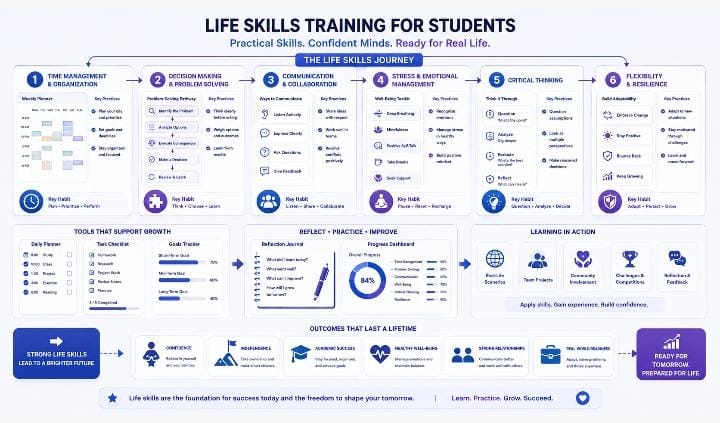
Table of Contents ▼
Quick Answer
Life skills training helps students develop practical abilities such as time management, decision making, communication, problem solving, emotional management, critical thinking, and resilience. Effective training uses interactive activities, case studies, role plays, worksheets, digital content, assessments, and trainer guidance to help students apply these skills in real-life situations.
Key Takeaways
- Life skills help students handle academic, personal, and career challenges.
- Time management and organization help students prioritize tasks and reduce overwhelm.
- Decision making and problem solving build confidence and independence.
- Communication and collaboration improve teamwork and social confidence.
- Stress and emotional management can support resilience and emotional intelligence.
- Critical thinking encourages students to analyze problems and explore multiple solutions.
- Flexibility and resilience help students manage setbacks and uncertainty.
- Effective training uses practical resources such as workbooks, role plays, case studies, digital content, assessments, and trainer guides.
- Trainers should make learning practical, engaging, relatable, and applicable to real-life situations.
- Consistent practice can help students develop confidence, communication, and problem-solving abilities.
Time Management and life Skills students can Master 2026
Life Skills Training: Why It Matters and How to Teach It Well
Life skills are functional abilities that help people navigate life’s challenges, make informed decisions, communicate effectively, and manage stress. These skills are foundational for success in academics, personal life, and career growth, and building them well is something TheEduAssist specializes in supporting.
What Are Life Skills and Why Do They Matter?
For students, life skills go far beyond textbooks. Without them, students often struggle with decision making, peer pressure, time management, or stress. Over time, this can lead to low confidence, frustration, and burnout.
Trainers play a critical role in closing this gap. If you are developing life skills training materials, your job is to give students resources that are engaging, practical, and solution focused, so the skills they learn can actually be applied in real life.
Why Life Skills Training Matters
Students commonly face a range of challenges, including:
- Decision making difficulties: uncertainty about the right course of action in daily life or school
- Time management struggles: difficulty organizing tasks and managing stress
- Emotional overload: stress, anxiety, and social pressure affecting focus and motivation
- Communication barriers: difficulty expressing themselves or resolving conflict
- Low problem solving confidence: hesitation and indecision when facing challenges
Life skills training gives students practical tools to face these challenges head on, building confidence and independence along the way.
Roles and Responsibilities of Life Skills Training Material Developers
Developers of life skills training materials play a key role in designing, planning, and delivering high quality resources. Core responsibilities include:
Designing Engaging Content
- Creating interactive exercises, case studies, and worksheets
- Focusing on problem solving tasks that mirror real life situations
Personalizing Content for Different Audiences
- Adapting materials based on age, learning level, and culture
- Making content relatable and genuinely actionable
Supporting Trainers
- Providing step by step instructions and facilitator guidance
- Adding practical tips to keep training sessions smooth and effective
Monitoring Learning Outcomes
- Including assessment tools, quizzes, and self reflection activities
- Following up to ensure students are actually applying the skills
Refreshing and Improving Resources
- Keeping content current with emerging challenges and learning practices
- Incorporating technology, eLearning modules, and modern training methods
Together, these responsibilities help trainers give students the tools to build life skills that genuinely last, an approach TheEduAssist’s training material development is built around.
Essential Life Skills for Students
Life skills can be grouped into several core areas that directly address real student challenges.
Decision Making and Problem Solving Learning to analyze, brainstorm, evaluate, and act, reinforced through hands on case studies and real scenarios.
Time Management and Organization Building prioritization, planning, and goal setting habits, supported by routines, schedules, and productivity tools.
Communication and Collaboration Focusing on verbal and non verbal communication, active listening, and teamwork through role play and group activities that build social confidence.
Stress and Emotional Management Introducing mindfulness, journaling, and relaxation techniques, along with self reflection to build emotional intelligence and resilience.
Critical Thinking and Innovation Encouraging logical thinking, analysis, and creativity by asking students to explore multiple solutions to complex problems.
Flexibility and Resilience Helping students manage change, setbacks, and uncertainty through coping strategies and a growth mindset.
Together, these core life skills prepare students to approach challenges with real confidence and independence.
Effective Life Skills Training Resources
To deliver effective training, trainers benefit from having ready to use resources such as:
- Workbooks and Worksheets: practice exercises, reflection prompts, and evaluations
- Role Play Scenarios: real life examples that build problem solving, communication, and teamwork skills
- Digital Content: eLearning modules, videos, and animations for virtual engagement
- Assessment Tools: quizzes, feedback forms, and reflection templates to measure progress
- Trainer Guides: clear guidelines, tips, and session ideas
These resources help trainers deliver problem solving focused sessions that genuinely engage students and translate into real world application.
Practical Problem Solving Tips for Students
Trainers can share simple, effective tips to help students build life skills, including:
- Break large tasks into smaller steps: makes time management easier and reduces overwhelm
- Reflect daily: encourages writing or debriefing to better understand choices and mistakes
- Ask for help when needed: reinforces that seeking guidance is a strength, not a weakness
- Learn alongside peers: builds teamwork through shared ideas and solutions
- Celebrate small wins: strengthens self esteem by recognizing progress along the way
How TheEduAssist Supports Trainers and Students
TheEduAssist does not just sell materials, it provides real guidance. Our goal is to help trainers develop and deliver life skills training that genuinely benefits students.
We help students:
- Solve problems with confidence
- Manage stress and emotions
- Communicate effectively
- Make informed decisions
TheEduAssist’s materials are practical, engaging, and student friendly, so learning translates directly into action. Whether you are running workshops, online courses, or classroom sessions, TheEduAssist offers the tools to make your training genuinely effective.
Start today with TheEduAssist and help students become lifelong learners of essential life skills.
Frequently Asked Questions
Who should receive life skills training?
Students, young adults, and anyone facing challenges with decision making or stress management.
Do life skills improve academic performance?
Yes, they help students stay more focused, organized, and effective at solving problems.
How can trainers make sessions more engaging?
Through role plays, case studies, interactive activities, and peer discussions.
What makes TheEduAssist different?
We offer more than training products, we provide guidance, templates, and ongoing support.
How quickly can students see results?
With consistent practice, improvements in confidence, communication, and problem solving are often visible within weeks.
Need Help Building or Scaling Your Online Learning Program?
Whether you are launching an academy on Kajabi, modernizing corporate LMS modules, or converting raw expertise into accredited curriculum, our senior instructional designers provide a complimentary architecture evaluation.
Sources & References
Frequently Asked Questions
QWho should receive life skills training?
Students, young adults, and anyone facing challenges with decision making or stress management can benefit from life skills training.
QDo life skills improve academic performance?
Yes. Life skills can help students stay focused, organized, and more effective at solving problems.
QHow can trainers make sessions more engaging?
Trainers can use role plays, case studies, interactive activities, and peer discussions to make sessions more engaging and practical.
QWhat makes TheEduAssist different?
TheEduAssist provides more than training products, offering guidance, templates, and ongoing support for life skills training.
QHow quickly can students see results?
With consistent practice, improvements in confidence, communication, and problem solving may become noticeable within weeks.