Learning Operations (LearningOps): The Complete Guide to Scaling Corporate Training
Learn how Learning Operations helps companies scale corporate training through governance, technology, automation, analytics, and better processes.
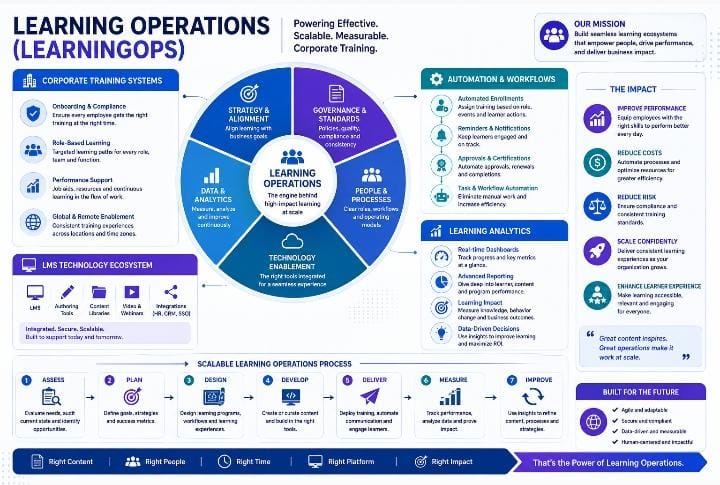
Table of Contents ▼
Quick Answer
This guide explains Learning Operations (LearningOps) and its role in scaling corporate training. It covers the five core pillars of LearningOps: governance and standards, technology and tools, content lifecycle management, data and analytics, and people and process. The article also explains how organizations can build a LearningOps strategy, manage their technology stack, automate training workflows, measure training impact, and address common challenges in corporate learning.
Key Takeaways
- Learning Operations connects instructional design, technology, processes, and business outcomes.
- LearningOps helps organizations manage training consistently across multiple platforms and locations.
- The five core pillars are governance and standards, technology and tools, content lifecycle management, data and analytics, and people and process.
- Auditing existing courses, tools, and ownership is an important first step when developing a LearningOps strategy.
- Technology integration can reduce disconnected systems and manual administrative work.
- Automation can support employee onboarding, course enrollment, reminders, and compliance training.
- Measuring reaction, learning, behavior, and business results provides a stronger view of training effectiveness.
- Clear roles and workflows help organizations scale corporate training without losing consistency or quality.
Learning Operations (LearningOps): The Complete Guide to Scaling Corporate Training
Learning Operations (LearningOps):
Corporate training used to be simple. A trainer built a course, employees sat through it, and that was that. Today, things look very different. Companies now manage dozens of courses, several platforms, and thousands of learners spread across many locations. Because of this shift, a new discipline has emerged called Learning Operations, often shortened to LearningOps.
In this guide, we will explain what Learning Operations means, why it matters, and how you can build a strong learning operations strategy for your own organization. We will also share practical tips that apply to teams in the USA and beyond.
What Is Learning Operations?
Learning Operations is the backbone that keeps corporate training running smoothly. It covers the systems, people, and processes that support learning and development, commonly known as L&D. Instead of focusing only on course content, LearningOps focuses on how that content gets created, delivered, tracked, and improved over time.
Think of it this way. Instructional design creates the course. Learning Operations makes sure the course reaches the right people, on the right platform, at the right time. It also makes sure the data from that course flows back to leadership so decisions can be made with confidence.
As a result, LearningOps has become the glue that connects instructional design, technology, and business outcomes.
Why Learning Operations Matters More in 2026
Several trends have pushed LearningOps into the spotlight this year.
First, remote and hybrid work remains common across the USA and other regions. Teams are scattered, so training must be consistent no matter where an employee sits. Second, companies now use many tools at once, such as learning management systems, content authoring platforms, and communication apps. Without strong operations, these tools become disconnected and messy. Third, leadership wants proof that training actually works. Gut feeling is no longer enough. Numbers and outcomes matter.
Because of these pressures, organizations that ignore Learning Operations often struggle with duplicated work, inconsistent training quality, and wasted budget. On the other hand, companies that invest in a solid learning operations framework tend to scale faster and spend smarter.
The Core Pillars of a Learning Operations Framework
A strong learning operations framework generally rests on five pillars. Let us walk through each one.
1. Governance and Standards
Every training program needs rules. Governance sets the standards for how courses are built, reviewed, and approved. This includes branding guidelines, accessibility requirements, and quality checklists. Without governance, every team builds training its own way, and the result feels disjointed.
2. Technology and Tools
This pillar covers the platforms that deliver and support learning. It includes your learning management system, authoring tools, video hosting, and reporting dashboards. Connecting these tools properly is essential. If you want to understand how to link your systems together, our guide on LMS integration and the most important systems to connect walks through the process step by step.
3. Content Lifecycle Management
Courses are not built once and forgotten. They need regular updates, retirement schedules, and version control. Content lifecycle management ensures nothing goes stale or outdated, which protects both compliance and learner trust.
4. Data and Analytics
This pillar answers one simple question. Is the training working? Learning Operations teams track completion rates, assessment scores, and behavior change on the job. Good analytics turn raw numbers into decisions leadership can act on.
5. People and Process
Finally, someone has to own all of this. Clear roles, defined workflows, and communication channels keep everything moving. Without ownership, even the best framework falls apart.
Building a Learning Operations Strategy
Once you understand the framework, the next step is turning it into a working learning operations strategy. Here is a simple path to follow.
Start with an audit. Before adding anything new, look at what already exists. List every course, every tool, and every owner. This step alone often reveals huge amounts of duplication.
Set clear goals. Decide what success looks like. Maybe it is faster onboarding. Maybe it is lower compliance risk. Whatever it is, write it down and share it with stakeholders.
Map your tech stack. Identify which systems talk to each other and which ones do not. If your HR software, your LMS, and your communication tools operate in silos, you are losing valuable time and data. Automating these connections is one of the fastest ways to reduce manual admin work, similar to how kajabi automation workflows save hours for teams managing digital platforms.
Centralize learner data. When learner records live in one place, reporting becomes far easier. This is where thinking about your data the way a strong CRM approach handles leads and customers can help. Our article on managing leads and students in one place explains this concept in more depth, and the same logic applies to managing learners.
Build feedback loops. Ask learners and managers what is working and what is not. Then, actually use that feedback to revise courses.
Communicate consistently. Training only works if people know it exists and understand why it matters. Consistent, well timed messaging plays a big role here. If you want ideas on structuring ongoing communication to your audience, our guide running successful email campaigns offers useful principles that translate well into internal learner communications too.
By following these steps in order, most teams can move from chaos to a clear, repeatable system within a few months.
Corporate Learning Operations in the USA
Corporate learning operations in the USA face a unique mix of challenges. Compliance requirements vary by state and industry, which makes standardisation tricky. At the same time, competition for skilled workers is intense, so companies must train people quickly without sacrificing quality.
Many organisations in the USA are now hiring dedicated Learning-Ops specialists rather than folding these duties into an already busy instructional design role. This shift shows how seriously companies now treat operations as its own discipline, not just an afterthought.
Additionally, USA based companies often manage global teams. This means LearningOps must account for time zones, languages, and cultural differences, all while keeping reporting centralized and consistent.
L&D Operations Roles and Team Structure
So, who actually does this work? L&D operations usually involves a mix of the following roles.
- LearningOps Manager: Oversees the entire framework and reports outcomes to leadership.
- LMS Administrator: Manages the platform, user access, and technical troubleshooting.
- Instructional Designer: Builds course content, often working closely with operations to follow standards.
- Data Analyst: Turns learning metrics into readable reports.
- Program Coordinator: Handles scheduling, communication, and logistics.
Smaller companies often combine these roles into one or two people. Larger enterprises, however, build entire departments around Learning Operations. Either way, clear ownership prevents important tasks from slipping through the cracks.
Choosing the Right Technology Stack
Technology sits at the heart of any learning operations strategy. However, more tools do not always mean better results. What matters is how well those tools connect and share data.
When evaluating a platform, consider these factors:
- Does it integrate easily with your HR and CRM systems?
- Can it scale as your workforce grows?
- Does it offer strong analytics out of the box?
- Is it accessible for learners with different needs?
If you are unsure where to start, our detailed breakdown of lms integration migration services covers the practical side of connecting systems without disrupting existing training programs. Getting this right early saves significant time later.
Automation: The Secret Weapon of Modern LearningOps
Automation has quietly become one of the biggest advantages in Learning Operations. Instead of manually enrolling employees or chasing overdue certifications, automated triggers handle these tasks in the background.
For example, when a new employee joins, automation can instantly assign onboarding courses, notify their manager, and schedule follow up check ins. Similarly, automated reminders can nudge learners who have not completed mandatory compliance training.
This is where lessons from other industries apply surprisingly well. Businesses that rely heavily on automated workflows, such as those described in our piece on kajabi automation workflow.
Measuring the Impact of Corporate Training
Measurement is often the weakest link in corporate learning operations. Many teams track completion rates and stop there. However, completion alone does not prove learning happened, and it certainly does not prove behavior changed on the job.
A stronger approach measures training at four levels:
- Reaction: Did learners find the training useful and engaging?
- Learning: Did knowledge or skills actually improve?
- Behavior: Are employees applying what they learned in their daily work?
- Results: Has the training influenced business outcomes, such as productivity or retention?
Consequently, a mature LearningOps team builds dashboards that track all four levels, not just the first one. This gives leadership a much clearer picture of return on investment.
Common LearningOps Challenges and How to Solve Them
Even well intentioned teams run into obstacles. Here are a few common ones, along with practical fixes.
Too many disconnected tools. Solution: Audit your stack regularly and integrate wherever possible instead of adding new software for every new need.
Low learner engagement. Solution: Shorten courses, add real world scenarios, and communicate why the training matters before launching it.
Inconsistent content quality. Solution: Create clear governance standards and require review before publishing new material.
Poor visibility into outcomes. Solution: Invest in analytics tools and build simple, readable dashboards for leadership.
Slow onboarding for remote hires. Solution: Automate enrollment and use structured checklists so no step gets missed, regardless of location.
By addressing these issues one at a time, teams can steadily strengthen their operations without feeling overwhelmed.
How to Get Started This Quarter
If your organization is new to Learning Operations, do not try to fix everything at once. Instead, pick one pain point, such as disconnected systems or missing analytics, and solve it first. Small, visible wins build momentum and make it easier to secure support for bigger changes later.
If you want expert help along the way, TheEduAssist offers guidance on connecting systems, structuring content, and building scalable training operations. Our resources on setting up strong online course structures also offer useful lessons for anyone building learner-facing systems that need to run fast and reliably.
Final Thoughts
Learning Operations is no longer a nice to have. It is quickly becoming the foundation that determines whether corporate training actually delivers value. By building a clear framework, choosing the right technology, automating repetitive tasks, and measuring what truly matters, organizations in the USA and around the world can scale their training programs without losing quality along the way.
The companies that get this right in 2026 will not just train employees. They will build learning systems that grow, adapt, and prove their worth year after year.
Frequently Asked Questions
How do I know if my corporate training is actually working?
Look beyond completion rates. Track whether learners retain knowledge, apply new skills on the job, and whether business metrics such as productivity or error rates improve afterward. If none of these shift, the training likely needs revision.
Why does our employee training feel like a waste of time?
This usually happens when content is too generic, too long, or disconnected from real job tasks. Training feels valuable when it solves a specific problem employees actually face in their daily work.
What is the best LearningOps platform for scaling corporate training programs?
There is no single best platform for every company. The right choice depends on your team size, budget, and existing systems. Look for platforms that integrate well with your HR and CRM tools and offer strong reporting features.
LearningOps software vs traditional LMS: which is better for large enterprises?
LearningOps software manages the entire operational layer, including workflows, governance, and analytics. A traditional LMS mainly delivers content. Large enterprises typically need both working together rather than choosing one over the other.
Which LearningOps solution offers the best analytics for corporate training impact?
Look for solutions that support multi level measurement, covering reaction, learning, behavior, and business results. Platforms with customizable dashboards and integration with business intelligence tools tend to offer the deepest insights.
What are the best LearningOps services for customizing training content at scale?
Services that combine instructional design expertise with strong technical integration tend to perform best. This allows content to be personalized for different teams while still staying connected to central reporting systems.
Which LearningOps system should I use to onboard remote employees?
Choose a system that supports automated enrollment, digital checklists, and asynchronous content delivery. This ensures remote hires receive consistent onboarding regardless of time zone or location.
References
- TheEduAssist. LMS Integration: The Most Important Systems to Connect to Your LMS
- TheEduAssist. LMS Integration and Migration Services
- TheEduAssist. Kajabi Automation Workflows
- TheEduAssist. Kajabi CRM: How to Manage Leads and Students in One Place
- TheEduAssist. How to Run Kajabi Email Campaigns Successfully
- TheEduAssist. Kajabi Online Course Setup
- TheEduAssist. Kajabi Website Speed Optimization
Need Help Building or Scaling Your Online Learning Program?
Whether you are launching an academy on Kajabi, modernizing corporate LMS modules, or converting raw expertise into accredited curriculum, our senior instructional designers provide a complimentary architecture evaluation.
Sources & References
Frequently Asked Questions
QHow do I know if my corporate training is actually working?
Look beyond completion rates. Track whether learners retain knowledge, apply new skills on the job, and whether business metrics such as productivity or error rates improve afterward. If none of these shift, the training likely needs revision.
QWhy does our employee training feel like a waste of time?
This usually happens when content is too generic, too long, or disconnected from real job tasks. Training feels valuable when it solves a specific problem employees actually face in their daily work.
QWhat is the best LearningOps platform for scaling corporate training programs?
There is no single best platform for every company. The right choice depends on your team size, budget, and existing systems. Look for platforms that integrate well with your HR and CRM tools and offer strong reporting features.
QLearningOps software vs traditional LMS: which is better for large enterprises?
LearningOps software manages the entire operational layer, including workflows, governance, and analytics. A traditional LMS mainly delivers content. Large enterprises typically need both working together rather than choosing one over the other.
QWhich LearningOps solution offers the best analytics for corporate training impact?
Look for solutions that support multi level measurement, covering reaction, learning, behavior, and business results. Platforms with customizable dashboards and integration with business intelligence tools tend to offer the deepest insights.
QWhat are the best LearningOps services for customizing training content at scale?
Services that combine instructional design expertise with strong technical integration tend to perform best. This allows content to be personalized for different teams while still staying connected to central reporting systems.
QWhich LearningOps system should I use to onboard remote employees?
Choose a system that supports automated enrollment, digital checklists, and asynchronous content delivery. This ensures remote hires receive consistent onboarding regardless of time zone or location.