How to Build Gamified Skool Courses: Complete Creator Guide (2026)
Master the art of gamification on Skool. Learn how to design level-unlocked curriculum, point systems, leaderboards, and community engagement loops that boost student retention by up to 300%.
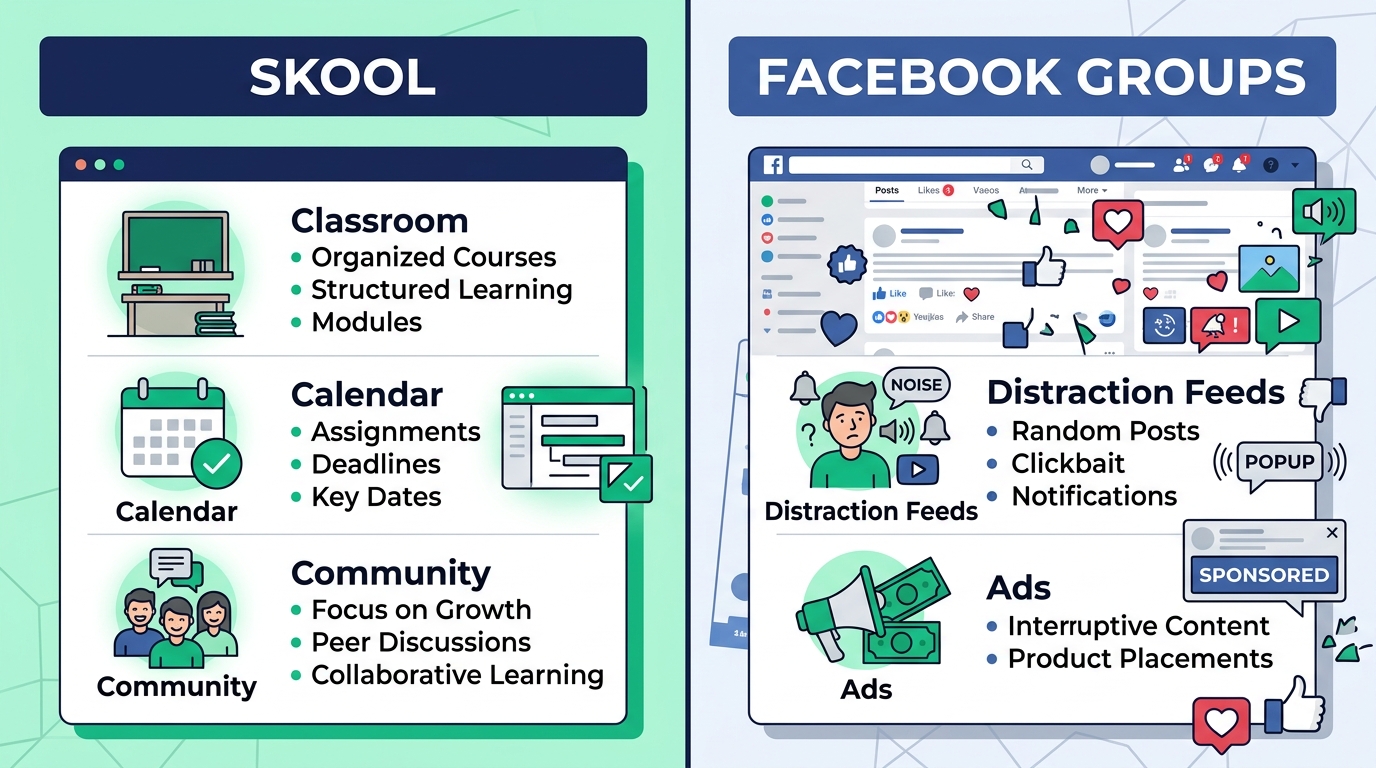
Table of Contents ▼
Quick Answer
In-depth guide to building gamified online courses and communities on Skool. Covers level-based course unlocking, leaderboard psychology, intrinsic vs extrinsic rewards, and actionable instructional design strategies to maximize course completion rates.
Key Takeaways
- Skool's native gamification system relies on points earned through peer upvotes, tying status directly to value creation.
- Level-gating advanced modules creates a powerful aspirational pull that drastically reduces early student churn.
- Balancing intrinsic rewards with tangible perks (e.g. 1-on-1 coaching unlocks at Level 7) generates sustained engagement.
- Automated celebration rituals within community feeds normalize consistent participation and peer accountability.
Why Traditional Online Courses Suffer from 90% Drop-Out Rates
The standard video-on-demand course model is broken. Across the online education industry, average completion rates for pre-recorded courses linger between 5% and 12%. When students purchase an online course, watch two modules in isolation, and face no peer interaction or accountability, momentum quickly evaporates.
Skool revolutionized digital course delivery by merging course hosting directly with a communal discussion feed and an integrated gamification engine. Instead of treating learning as a solitary activity, Skool turns educational progression into a collaborative, status-driven social experience.
By implementing structured gamification, creators do not just deliver information; they architect an environment where learners are incentivized to implement, share breakthroughs, and support fellow peers.
The Anatomy of Skool’s Native Gamification Architecture
Unlike complex learning management systems that require external plugins and arbitrary point counters, Skool keeps gamification clean, transparent, and focused on peer validation:
1. The Peer-to-Peer Point Engine
Members earn 1 point whenever another community member likes their post or comment.
- The Psychological Driver: Because points cannot be artificially manufactured by spamming generic posts, members must produce genuinely helpful contributions, detailed case studies, or thoughtful questions to earn upvotes from their peers.
2. Dynamic Community Leaderboards
Skool displays three rolling leaderboards on the community homepage:
- 7-Day Rolling Leaderboard: Gives newcomers an immediate chance to rank alongside veteran members by being active this week.
- 30-Day Rolling Leaderboard: Rewards consistent mid-term engagement.
- All-Time Leaderboard: Establishes respected elder status for core community leaders.
3. Milestone Level Gating (Levels 1 to 9)
Skool features 9 distinct tiers. As members accumulate points from community upvotes, they cross pre-set thresholds:
- Level 1: 0 points (Entry)
- Level 2: 5 points
- Level 3: 20 points
- Level 4: 65 points
- Level 5: 155 points
- Level 6: 515 points
- Level 7: 1,415 points
- Level 8: 3,915 points
- Level 9: 10,000+ points
Step-by-Step Blueprint: Designing a High-Converting Gamified Curriculum
Step 1: The Core vs Bonus Content Split
Avoid the fatal mistake of locking essential training behind high levels. If a paying member cannot access the fundamental setup instructions, they will churn immediately.
- Level 1 (Open Access): Core training roadmap, quick-start setup guide, introduction video, and community rules.
- Level 2 (Quick Win Unlock - 5 Points): The first downloadable resource library or prompt swipe file. Reached simply by posting an introduction and replying to 3 members.
- Level 4 (Action Taker Tier - 65 Points): Advanced masterclasses, live Q&A call recordings, or proprietary spreadsheet calculators.
- Level 7 (Mastery Tier - 1,415 Points): Direct hot-seat audit access, exclusive mastermind channel, or physical merchandise gift.
Step 2: Designing the Introduction Quest
The first 48 hours determine member lifetime value. Design a frictionless “First Quest” inside your onboarding module:
- Complete Lesson 1 (under 5 minutes).
- Write a 3-sentence introduction in the community using a specific hashtag template.
- Leave an encouraging comment on two recent member introductions.
- Result: The new member immediately earns 3 to 5 likes, triggers their first Level Up notification, and experiences positive psychological reinforcement on day one.
Step 3: Creating Collaborative Weekly Challenges
To prevent leaderboard burnout, run recurring weekly sprint prompts:
- Win Wednesday: Members share one measurable progress milestone achieved this week.
- Feedback Friday: Members share drafts, resumes, or campaign designs for collective peer review.
Key Benchmarks: Gamified vs Standard Course Communities
| Metric | Traditional Video Course | Gamified Skool Community |
|---|---|---|
| Course Completion Rate | 7% - 14% | 48% - 72% |
| 30-Day Active Logins | 18% | 64% |
| Organic Peer-to-Peer Help | Near 0% | 82% of questions answered by members |
| 90-Day Churn Rate (Subscriptions) | 35% - 50% | 8% - 15% |
Summary & Next Steps for Creators
Gamification on Skool is not about gimmicks or decorative badges; it is about social recognition, structured progress transparency, and positive behavioral design. When you reward students for actively implementing and helping others, your community transforms from a static course library into a self-sustaining educational ecosystem.
Need Help Building or Scaling Your Online Learning Program?
Whether you are launching an academy on Kajabi, modernizing corporate LMS modules, or converting raw expertise into accredited curriculum, our senior instructional designers provide a complimentary architecture evaluation.
Frequently Asked Questions
QHow does gamification work on Skool?
On Skool, members earn 1 point every time another member likes their post or comment. Accumulating points unlocks higher levels (Levels 1 through 9). Community creators can gate specific courses, downloadable resources, or private discussion spaces behind these unlock levels.
QDoes gating course content behind levels frustrate paying students?
When implemented thoughtfully, no. The best practice is to make core onboarding and foundational coursework immediately accessible at Level 1, while reserving bonus workshops, advanced templates, and guest masterclasses as milestone unlocks at Levels 3, 5, and 7.
QCan gamification increase monthly community recurring revenue (MRR)?
Yes. Data across modern subscription communities shows that members who actively participate on leaderboards and attain Level 4 or higher maintain an average 90-day retention rate of over 78%, compared to less than 24% for passive lurkers.