The Ultimate, Ohio Focused Blueprint for Building a Debate Training Program
Discover the ultimate Ohio-focused blueprint for building a successful debate training program in 2026. Perfect for educators, coaches, and training organizations in Columbus, Cleveland, Cincinnati, and across Ohio.
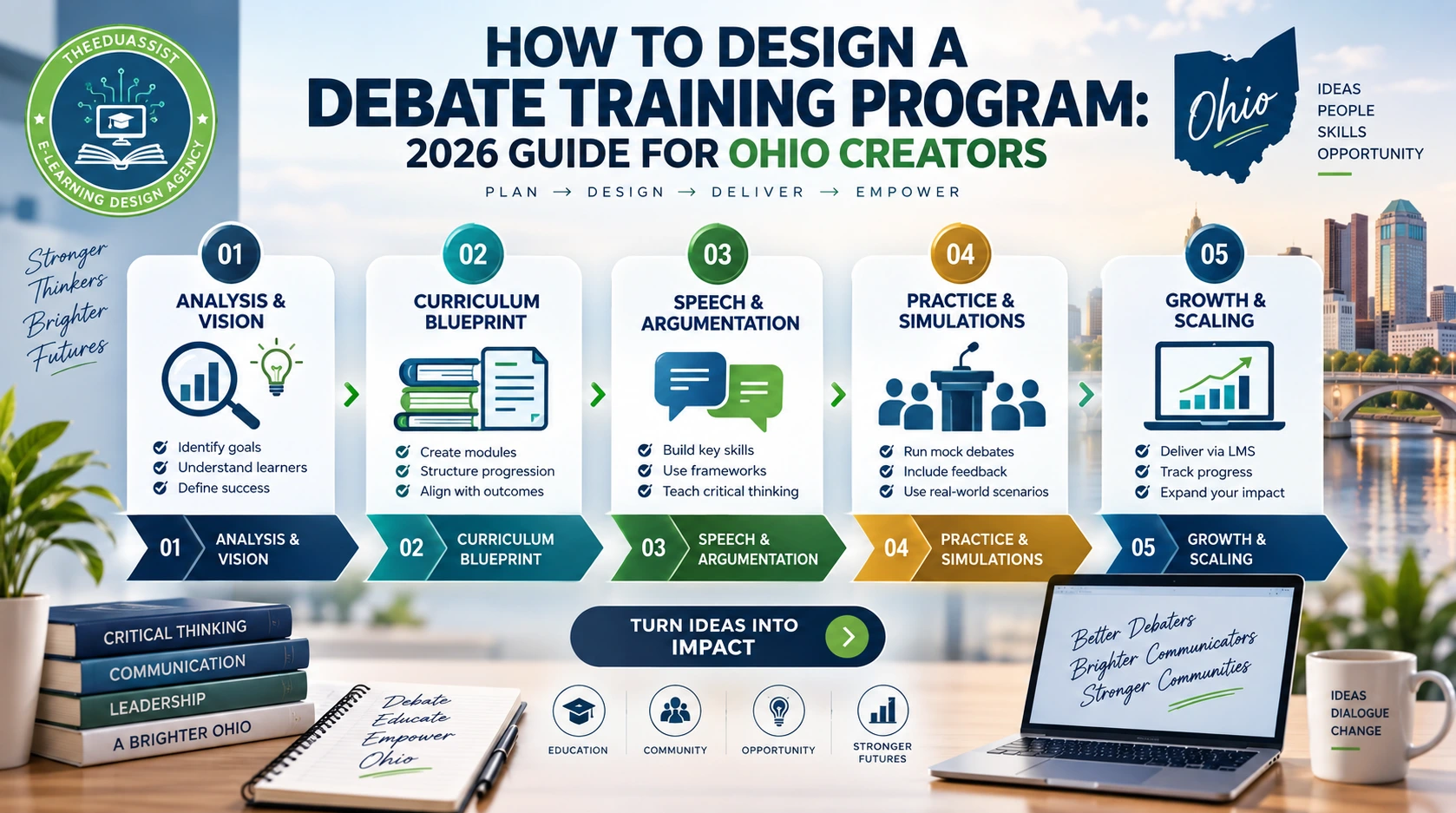
Table of Contents ▼
Quick Answer
This guide explains how to build a structured and scalable debate training program for educators, academies, coaches, and course creators in Ohio. It covers defining measurable learning outcomes, developing a progressive debate curriculum, using the Claim–Evidence–Reasoning model, incorporating mock debates and peer feedback, applying microlearning, and delivering training through an LMS. The approach is designed to develop critical thinking, communication, research, collaboration, and analytical skills while creating a measurable and repeatable learning experience.
Key Takeaways
- Start with measurable skills and learning outcomes rather than simply teaching broad debate topics.
- Build progressively structured curriculum modules covering argumentation, evidence, rebuttals, practice, and performance evaluation.
- Combine interactive practice with LMS-based delivery to make debate training engaging, scalable, and outcome-driven.
Debate-based learning is rapidly gaining attention as one of the most effective active learning strategies in modern education. From academic institutions to coaching businesses, many educators and course creators are now looking to build structured debate training programs.
In cities like Columbus, Cleveland, Cincinnati, Toledo, Akron, and Dayton, course creators and academies are exploring how to turn debate into a scalable online course or training program.
However, a recurring challenge appears:
- Experts understand debate and argumentation
- They want to teach it effectively
- But they struggle with curriculum structure, engagement, and delivery
Most debate programs fail because they rely on unstructured discussions instead of instructional design frameworks.
To create a successful debate training program in 2026, you need a combination of:
- Instructional design
- Structured curriculum development
- Interactive learning methods
- LMS-based delivery
Why Debate Training Matters More Than Ever:
Debate is not just about arguing; it is a structured method of learning. Research shows that debate-based learning:
- Improves critical thinking and reasoning skills
- Enhances communication and collaboration
- Strengthens research and analytical abilities
Additionally, structured debates help learners:
- Develop confidence in public speaking
- Understand multiple perspectives
- Engage deeply with subject matter
These outcomes align strongly with eLearning trends 2026, where learners expect interactive and skill-based training programs rather than passive content.
Debate Curriculum by inTeachers
The Core Problem: Why Most Debate Programs Fail
Many creators design debate programs as:
- Open discussions
- Loosely guided arguments
- Unstructured classroom activities
The result?
- Inconsistent learning outcomes
- Poor engagement
- Lack of measurable skill development
The real issue is the absence of instructional design and structured content development. Debate must be treated as a designed learning experience, not just an activity.
What Makes a High-Quality Debate Training Program:
A well-designed debate program includes:
- Clear learning objectives
- Structured argument frameworks
- Guided practice sessions
- Feedback and evaluation mechanisms
- Progressive skill development
According to educational frameworks, debate works best when:
- Learners are assigned roles
- Time structures are defined
- Arguments follow logical frameworks
- Reflection and feedback are included
This transforms debate into a repeatable and scalable training system.
Step 1: Define Learning Outcomes (Start With Skills, Not Topics)
Avoid vague goals like:“Teach debate skills”
Instead, define outcomes such as:
- Construct logical arguments using evidence
- Deliver structured rebuttals
- Analyze opposing viewpoints critically
For example, a program in Cleveland might focus on professional communication and persuasion skills, while one in Columbus may target academic debate training.
Step 2: Build a Structured Curriculum Framework
A strong debate curriculum should follow a progressive model:
| Module | Focus |
|---|---|
| Module 1 | Introduction to Debate Fundamentals |
| Module 2 | Argument Structure (Claim–Evidence–Reasoning) |
| Module 3 | Research and Evidence Gathering |
| Module 4 | Rebuttal Techniques |
| Module 5 | Live Debate Practice |
| Module 6 | Feedback and Performance Evaluation |
This structure ensures learners move from understanding to application.
Step 3: Use the Claim–Evidence–Reasoning Model
One of the most effective frameworks in debate training is:
- Claim → What is your position?
- Evidence → What proof supports it?
- Reasoning → Why does the evidence matter?
This structured approach is widely used in debate-based teaching to ensure clarity and logical argumentation. For creators building custom eLearning programs, this model provides a repeatable structure across lessons.
Step 4: Design Interactive and Practice-Based Learning
Debate cannot be learned passively. Your program should include:
- Mock debates
- Team-based activities
- Timed argument sessions
- Peer feedback exercises
Effective formats include:
- Team vs team debates
- Moderated discussions
- Role-based simulations
For example, a training academy in Cincinnati may include weekly live debate sessions via LMS platforms.
Step 5: Integrate Microlearning and Content Variety
Modern learners prefer short, focused lessons. Your program should include:
- Short video lessons
- Downloadable templates
- Structured worksheets
- Guided exercises
This aligns with microlearning strategies and improves retention. It also supports scalable content development for online courses.
10 Best Learning Management Systems Compared
Step 6: Deliver Through an LMS for Scalability
To scale your debate program, you need an LMS. Popular platforms include:
- Kajabi
- Thinkific
- Teachable
These platforms allow you to:
- Organize modules
- Host debate recordings
- Track learner progress
- Manage assessments
For creators in Toledo or Dayton, LMS-based delivery ensures a consistent learning experience across cohorts.
Quick Comparison Table: LMS Platforms for Debate Training
| Platform | Best For | Key Advantage |
|---|---|---|
| Kajabi | Coaching Businesses | Built-in Marketing Tools |
| Thinkific | Educators | Flexible Curriculum Structure |
| Teachable | Beginners | Easy Course Setup |
Cost Reality Check: Building a Debate Training Program
- Instructional design: $2,000 – $5,000
- Video production: $1,000 – $3,000
- Learning materials: $500 – $1,500
- LMS subscription: $39 – $199/month
While some creators DIY their programs, investing in professional instructional design and consulting services often leads to better learner outcomes.
Unique Perspective: Debate as a “Skill Accelerator System”
In 2026, debate is no longer just a classroom activity; it is a skill accelerator. Modern debate programs help learners develop:
- Communication skills
- Leadership abilities
- Decision-making confidence
- Analytical thinking
This makes debate training highly valuable in:
- Business coaching
- Leadership training
- Academic programs
For L&D professionals, debate-based learning is becoming a key strategy in custom eLearning solutions.
Final Thoughts:
For creators in Columbus, Cleveland, Cincinnati, Toledo, Akron, and Dayton, designing a debate training program presents a strong opportunity in the evolving EdTech space.
However, success depends on structure, not just expertise.
By combining:
- Instructional design
- Structured curriculum development
- Interactive learning strategies
- LMS-based delivery
You can create a debate program that is engaging, scalable, and outcome-driven.
Need Help Building or Scaling Your Online Learning Program?
Whether you are launching an academy on Kajabi, modernizing corporate LMS modules, or converting raw expertise into accredited curriculum, our senior instructional designers provide a complimentary architecture evaluation.
Sources & References
- Debate as a tool to develop disciplinary practices and student agency
- Debate: a teaching-learning strategy for developing competence in communication and critical thinking
- Teaching Debate Across the Curriculum
- Learning Intranet - Curriculum Design
- Instructional Design in Action: Practical Solutions for Learner Problems
- Transformational Curriculum Design
- How to Create Engaging Educational Content for Online Platform 2026
- LMS Implementation Guide
- How to Build a Massive High-Ticket Funnel in 20 Days
- 10 Best Learning Management Systems Compared
- Interactive eLearning: The Future of Engaging Online Education
Frequently Asked Questions
QWhat should a debate training program include?
A strong program includes structured modules, argument frameworks, practice debates, and feedback mechanisms.
QHow can TheEduAssist help design a debate training program?
Through edu-assist consulting services, [theeduassist.com](https://www.theeduassist.com) supports creators with custom eLearning curriculum design, content development, and LMS implementation.
QWhat skills do learners gain from debate training?
Learners develop critical thinking, communication, research, and collaboration skills.
QCan debate training be delivered as an online course?
Yes, debate programs can be delivered through LMS platforms like Kajabi or Thinkific with live and recorded sessions.
QWhy is instructional design important in debate training?
Instructional design ensures debates are structured, measurable, and aligned with learning outcomes, not just open discussions.