
Strategic Digital Product Architecture for Wealth Systems: A Simple Guide
Learn how Strategic Digital Product Architects use GoHighLevel (GHL), learner journeys, automation, and digital architecture to improve wealth education platforms and member engagement
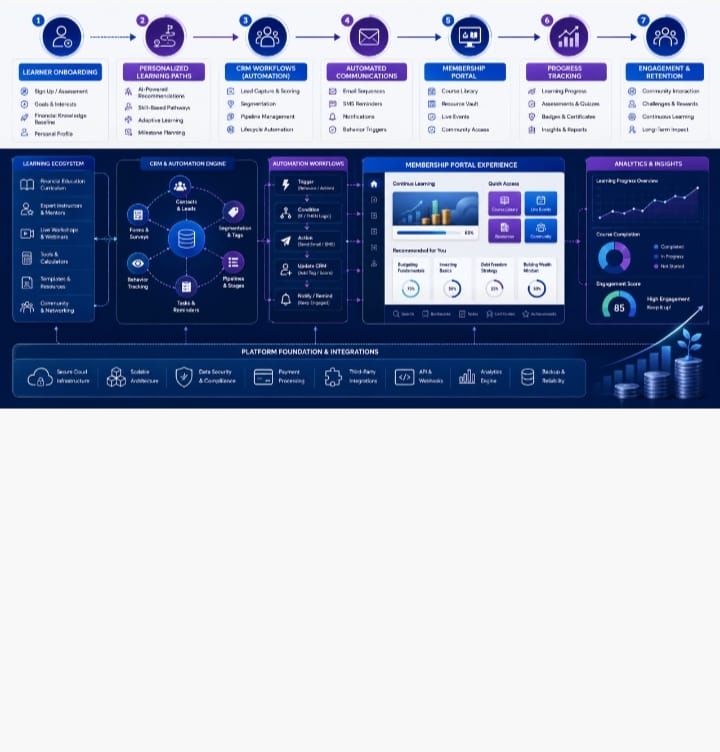
Table of Contents ▼
Quick Answer
Strategic Digital Product Architecture helps wealth education platforms create structured, scalable, and learner-centered experiences. This article explores the role of digital product architects, the use of GoHighLevel (GHL), common learner challenges, and strategies that improve engagement, retention, and learning outcomes
Key Takeaways
- Wealth education requires clear, structured, and trustworthy learning experiences.
- Strategic Digital Product Architects design learner journeys, automations, and platform structures.
- GoHighLevel helps manage CRM workflows, memberships, communication, and learning systems.
- Effective digital architecture improves engagement, retention, and learner confidence.
- Poor platform design often leads to confusion, overwhelm, and learner drop-off.
- Structured onboarding and guided learning paths improve outcomes.
- Scalable learning ecosystems support long-term business and learner success.
Strategic Digital Product Architecture for Wealth Systems: A Simple Guide
The Strategic Digital Product Architect in Wealth Education
Wealth education is a space where trust, clarity, and steady progression matter more than almost anything else. Learners are making real financial decisions, often for the first time, and the platform guiding them needs to feel structured, credible, and supportive.
A Strategic Digital Product Architect plays a central role in making that happen. This role frequently relies on platforms such as GoHighLevel (GHL) to build funnels, membership portals, CRM workflows, and automated learning experiences that support scalable, sustainable wealth education programs. Organizations exploring this kind of system design often turn to TheEduAssist for guidance.
Where Is This Role Used?
Strategic Digital Product Architects are commonly found in:
- Online wealth education
- Investment learning systems
- Financial mentorship and coaching
- Wealth communities and subscriptions
- Financial literacy EdTech platforms
- High ticket coaching and advisory ecosystems
Any business offering structured financial or wealth education online needs a strong digital architecture, one that makes learners feel supported and guided rather than left alone in an online classroom.
Why Wealth Systems Need This Function
Wealth education is inherently complex. Learners typically arrive with:
- Varying levels of financial knowledge
- Fear around risk and uncertainty
- Limited time and attention
- A genuine need for trust and clarity
Even excellent content cannot deliver results without the right digital structure behind it. A Strategic Digital Product Architect ensures that:
- Learners know exactly where to begin
- Progress feels logical and gradual
- Resources and tools are easy to access
- Automation supports learners rather than overwhelming them
- The platform can scale without creating confusion
Key Responsibilities of a Strategic Digital Product Architect
Member Journey Design Mapping learning and engagement paths that flow smoothly from onboarding through advanced mastery.
Platform Architecture (GHL) Building dashboards, membership areas, automations, CRM pipelines, and communication flows using GoHighLevel.
Experience Optimization Making the platform intuitive, frictionless, and accessible for learners at every level.
Retention and Engagement Strategy Creating systems that keep members engaged through progress tracking, notifications, milestones, and community touchpoints.
Scalability Planning Designing systems that can grow without disrupting the learner experience.
Strategies Used in This Role
- User centered experience design
- Modular learning architecture
- Automated onboarding and follow ups
- Behavior based promotion systems
- Data driven optimization
- Clear separation between novice, intermediate, and advanced learning tracks
Together, these strategies help learners avoid feeling overwhelmed while steadily building confidence. This is the same structured approach TheEduAssist’s instructional design team applies when building learning ecosystems for clients.
Common Problems in Ineffective Online Wealth Programs
Learners in poorly structured programs often face:
- Confusion about where to start
- Information overload
- No clear or logical progression
- Difficult platform navigation
- Weak engagement after signup
- No visible connection between learning and real world application
These issues quickly lead to frustration, dropouts, and disappointing outcomes.
How a Strategic Digital Product Architect Solves These Problems
Strong digital architecture addresses these challenges by:
- Designing guided onboarding processes
- Simplifying dashboards and content consumption
- Breaking complex wealth concepts into manageable modules
- Using automation to support learner progress
- Maintaining clarity, consistency, and confidence throughout
The result is a learner who feels supported, not overwhelmed.
The Role of GHL (GoHighLevel) in Wealth System Architecture
GoHighLevel sits at the center of this work by enabling:
- All in one platform management
- CRM driven learner tracking
- Automated communications and reminders
- Funnel to membership integration
- Scalable community and course systems
When used strategically, GHL becomes the foundation for a successful wealth education organization.
The Future Role of Digital Product Architecture in Wealth Education
As wealth education continues moving online, the need for structured, experience driven platforms will only grow. Learners increasingly expect:
- Personalized learning journeys
- Clear, measurable outcomes
- Seamless digital experiences
- Continuous support
Digital Product Strategists will play an increasingly important role in building credible, adaptable, outcome driven wealth systems.
How TheEduAssist Helps Solve These Challenges
TheEduAssist focuses on building and refining digital learning ecosystems centered on clarity, engagement, and measurable outcomes.
TheEduAssist helps by:
- Designing structured learning architecture
- Improving member experience and retention
- Connecting business strategy with education goals
- Applying scalable systems grounded in proven instructional design principles
- Turning complex information into simple, digestible learning journeys
By combining instructional design expertise with a digital systems approach, TheEduAssist helps deliver real value to learners across wealth platforms.
Conclusion
Any wealth system aiming to educate, engage, and retain learners effectively needs a Strategic Digital Product Architect. Even the strongest content falls short without the right digital architecture behind it.
Success in wealth education programs depends on prioritizing member experience, structured journeys, and scalable systems, supported by platforms like GoHighLevel that make long term outcomes achievable. With professional support from TheEduAssist, organizations can turn disconnected platforms into powerful, learner centered ecosystems.
Call to Action
If your wealth education platform is struggling with engagement, structure, or scalability, the real issue may not be your content, it may be your system design.
Partner with TheEduAssist to build a strategic, learner centered digital architecture that drives clarity, confidence, and real outcomes.
Frequently Asked Questions
Is Strategic Digital Product Architecture a technical role?
Partially. It blends strategy, user experience, and platform design, rather than being purely development focused.
Can small wealth platforms benefit from this role?
Yes. Structured systems are often even more essential for smaller teams working with limited resources.
Why does member experience matter so much in wealth education? Learners are making real financial decisions, which requires trust, clarity, and confidence at every step.
Does TheEduAssist build platforms or only design them?
TheEduAssist focuses on business oriented strategic design, optimization, and learning architecture.
Does this approach improve course completion rates?
Yes. Guided paths and supportive systems significantly boost learner engagement and success.
Sources & References
Frequently Asked Questions
QWhat does a Strategic Digital Product Architect do?
A Strategic Digital Product Architect designs learner journeys, digital systems, automations, and platform experiences that support engagement and growth.
QWhy is digital architecture important in wealth education?
It helps learners navigate content clearly, stay engaged, and progress through learning without feeling overwhelmed.
QWhat role does GoHighLevel play in wealth systems?
GoHighLevel supports CRM management, automation, membership portals, communication workflows, and learner tracking.
QCan small wealth education businesses benefit from digital architecture?
Yes. Structured systems help smaller organizations improve efficiency, learner experience, and scalability.
QHow does digital architecture improve learner retention?
By creating guided onboarding, clear learning paths, automated support, and a smoother user experience.