
Mitigating Legal & Compliance Risks for Clinical Leaders: The Hidden Dangers of Unwitnessed Restroom Interventions
Explore the legal, safeguarding, and compliance risks of unwitnessed restroom interventions and learn how clinical leaders can establish safer toileting and diapering procedures for students with autism and other support needs.
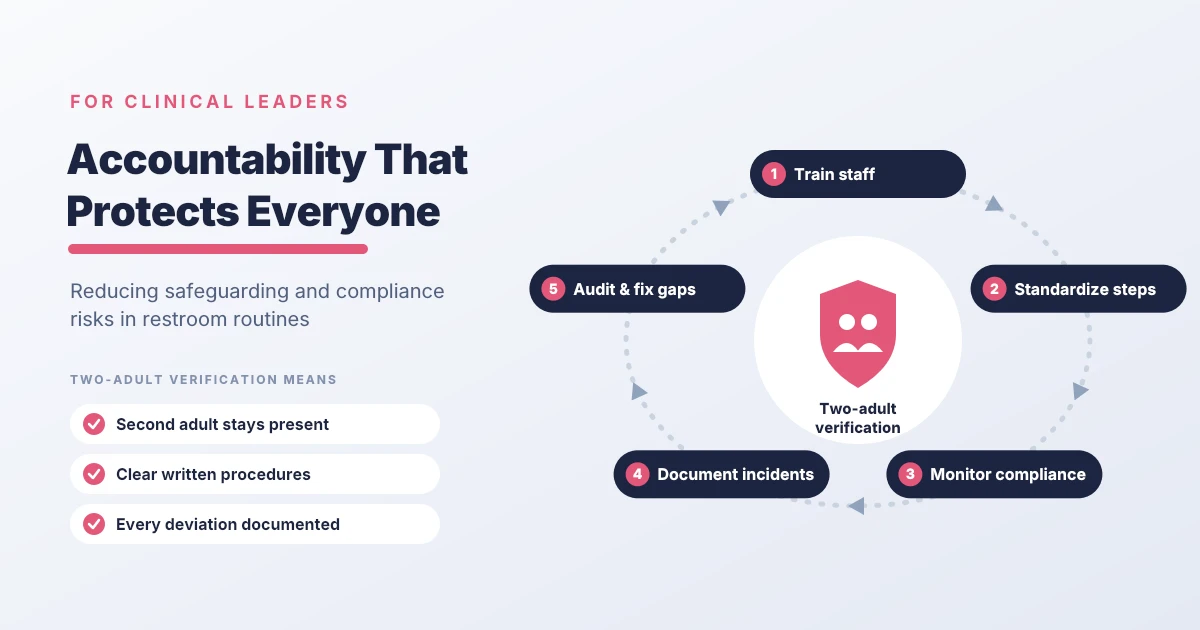
Table of Contents ▼
Quick Answer
This article examines the safety and compliance concerns associated with single-staff restroom interventions involving students who require toileting or diapering support. It explains the importance of two-adult supervision, witness and chaperone responsibilities, appropriate student handling, and consistent documentation. It also outlines how clinical leaders can establish standardized restroom procedures, train staff, audit practices, and address compliance gaps to strengthen student safeguarding and organizational accountability.
Key Takeaways
- Single-staff interactions may make it harder to independently verify that student boundaries and care procedures were respected.
- Two-adult assistance and witness coverage should follow applicable district protocols, student care plans, and individual support requirements.
- Staff training, IEP reviews, standardized toileting routines, and clear witness responsibilities help strengthen accountability.
What Are the Compliance Risks of Unwitnessed Restroom Interventions?
Independent Toileting is an important developmental milestone for children, but children with special needs may take longer to achieve it. Challenges with communication, recognizing the need to use the restroom, and moving between activities can make toilet training more difficult for such kids. As such, some students require assistance with toileting or diapering after starting school.
For schools and specialized care providers, this makes clear restroom support procedures essential. Staff must understand each student’s individual needs, follow any toileting goals or instructions in their Individualized Education Program IEP, and provide the required supervision during restroom routines. When staff assist students without the required second adult or witness, they may create safety and compliance concerns.
Why Are Single-Staff Restroom Entries a Legal and Safety Concern?
Restrooms can present unique safety challenges for special needs students; some students may not understand the rules of public bathroom behavior, including personal boundaries and privacy. These gaps in understanding can make them more vulnerable to exploitation and bullying.
As Christine Reeve, a special education professional and behaviour analyst, explains, students may need explicit instruction in restroom expectations that other children learn informally. For care providers, this highlights the importance of safeguarding procedures and appropriate staff supervision. When an employee enters a restroom alone with a student, the interaction may lack independent observation, making it harder to verify that boundaries and procedures were followed. A witness or chaperone model can provide an additional layer of accountability and help protect both the student and the staff member.
What Are the Risks of Improper Student Supervision During Toileting and Diapering?
Inadequate supervision during toileting and diapering can expose students with autism and other support needs to safety risks, including falls, improper handling, and potential boundary violations. Students who need hands-on assistance may be particularly vulnerable if staff leave them or fail to follow the required two-adult procedures.
These situations can also create concerns for providers, including safeguarding complaints, gaps in documentation, and questions about whether staff followed established care protocols. To reduce these risks, providers should ensure that employees understand their supervision responsibilities and maintain appropriate adult coverage throughout each procedure.
What Should Staff Know About Witness and Chaperone Responsibilities?
A witness or chaperone provides an additional layer of supervision during restroom procedures involving students who need support. Their role is to observe the interaction, remain available throughout the procedure, and help ensure staff follows the required safety and privacy guidelines.
Staff should understand that a witness is not simply someone nearby or available if needed. Under a two-adult verification model, the second adult must remain present and able to observe the procedure as required by the applicable protocol. If a staff member needs to enter the restroom to provide additional assistance, the witness should accompany them rather than remain outside.
How Can Clinical Leaders Establish Consistent Restroom Safety Procedures?
Clinical leaders can establish consistent restroom safety procedures by creating clear guidelines that staff can follow during every toileting and diapering routine. These procedures should outline supervision requirements, witness responsibilities, hygiene practices, safe transfers, and appropriate student interactions.
They should also ensure that:
- Staff receive regular training: Employees understand when two-adult support or a witness is required.
- Student needs are reviewed: Individual care plans and IEP instructions are followed.
- Procedures are standardized: Staff use consistent steps for toileting, diapering, handwashing, and mechanical lift transfers.
- Compliance is monitored: Supervisors conduct routine checks and address gaps in staff practices.
- Incidents are documented: Any concerns or deviations from established procedures are recorded and addressed promptly.
By setting clear expectations and reviewing practices regularly, clinical leaders can strengthen safeguarding, improve accountability, and support safer restroom routines.
How Can Providers Audit Restroom Procedures and Address Compliance Gaps?
Providers can audit restroom procedures by regularly reviewing staff practices, supervision arrangements, and documentation to identify areas that need improvement. Clinical leaders should check whether employees follow the required two-adult staffing model, maintain appropriate witness coverage, use safe transfer techniques, and meet hygiene standards.
When gaps are identified, providers should take steps to correct them. This may include providing refresher training, updating written procedures, improving staff scheduling, or replacing damaged equipment. They should also review incident reports and document corrective actions to track progress.
Final Thoughts
Safe restroom procedures are essential for protecting students who need toileting and diapering support. For autism and specialized care providers, clear supervision guidelines, witness responsibilities, and consistent staff training can help reduce safeguarding and compliance risks. Clinical leaders should regularly review their procedures, address gaps, and ensure staff understand their responsibilities. These steps support student dignity and safety while strengthening accountability across the organization.
Evaluating Your Learning Stack or Course Architecture?
Whether modernizing legacy SCORM packages, auditing Section 508 WCAG compliance, or validating multi-tenant LMS migrations, our instructional engineering team offers a structured technical assessment.
Sources & References
Frequently Asked Questions
QWhy is a two-adult model important in special education restrooms?
A two-adult model can provide additional safeguarding, accountability, and support during personal care routines. It can help protect students who require hands-on assistance while also providing staff with an additional layer of oversight.
QWhat should a restroom witness document?
Documentation requirements depend on the organization's policies. Records may include the date and time, staff involved, type of assistance provided, relevant observations, and any incidents or deviations from the established procedure.
QHow often should providers review their restroom safety procedures?
Providers should review procedures regularly, particularly when district requirements change, student support needs are updated, incidents occur, or audits identify gaps. Refresher training can also help staff maintain consistent practices.
