10 Strong Competitor Analysis Tools To Benchmark Your eLearning
10 strong competitor analysis tools for eLearning businesses to benchmark SEO, content, traffic, engagement, and course performance.
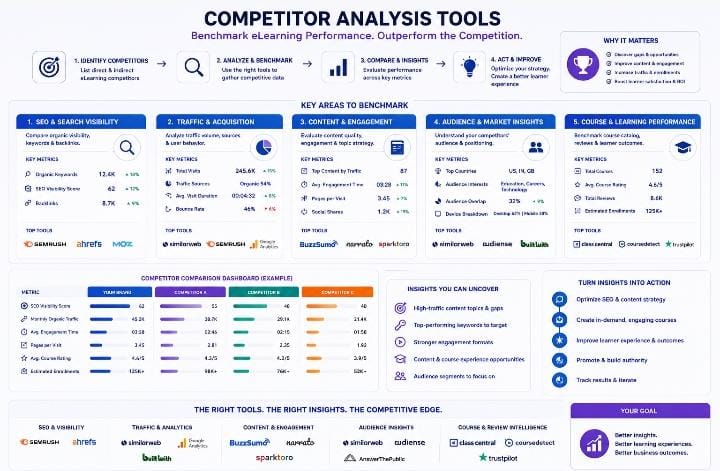
Table of Contents ▼
Quick Answer
This article explains how competitor analysis helps eLearning businesses benchmark performance, identify market gaps, improve course engagement, and refine SEO and marketing strategies. It reviews tools including Ahrefs, SEMrush, SimilarWeb, SpyFu, BuzzSumo, BuiltWith, Owler, data.ai, SocialBlade, ReviewTrackers, and G2, followed by a simple framework for ongoing competitor benchmarking.
Key Takeaways
- Competitor analysis helps eLearning businesses identify market gaps and improvement opportunities
- Ahrefs and SEMrush can help analyze SEO, keywords, traffic, and competitor strategies.
- SimilarWeb provides insights into traffic sources and audience behavior.
- BuzzSumo helps identify content and engagement trends.
- BuiltWith can reveal competitors' technology stacks.
- Reviews and feedback can highlight learner expectations and common problems.
- A simple benchmarking process can compare competitors' pricing, content, traffic, and engagement.
- Competitor analysis should be an ongoing process rather than a one-time activity.
10 Strong Competitor Analysis Tools To Benchmark Your eLearning
The eLearning industry is growing fast, and competition is getting tougher every year. To stay ahead, you need more than great content you need to understand how your competitors operate and where you stand. Benchmarking helps you do exactly that by showing what works, what doesn’t, and where you can improve. At TheEduAssist, we help instructional designers, L&D managers, and course creators optimize their learning products using data-driven insights. Whether you are building courses on Kajabi or managing communities on Skool, competitor analysis gives you a clear path to better engagement, higher completion rates, and stronger ROI. Competitor analysis is not about copying others. It is about learning from the market and creating something better. Research shows that businesses using benchmarking strategies can improve learner engagement significantly and reduce development time. This makes it one of the most powerful tools for growth in eLearning.
Why Competitor Analysis Matters?
Many eLearning courses fail not because they lack information, but because they fail to stand out. When courses look and feel the same, learners lose interest quickly. This is one of the main reasons behind high dropout rates.
Competitor analysis helps you identify gaps in the market. It shows what your competitors are doing well and where they are falling short. With this insight, you can create courses that are more engaging, more relevant, and more effective.
For instructional designers, this means faster workflows and better structure. For L&D managers, it provides clear data to justify investment decisions. Educators can improve delivery and engagement, while course creators can refine their marketing strategies. Decision makers can use these insights to scale their learning programs more effectively.
Ahrefs : SEO and Content Benchmarking
Ahrefs is a powerful tool for understanding how competitors attract traffic. It shows which pages perform best, what keywords they rank for, and where their backlinks come from.
With Ahrefs, you can discover content gaps in your own strategy. For example, if competitors are ranking for topics like microlearning or course templates, you can create better and more targeted content around those areas. This helps improve your visibility and attract the right audience.
SEMrush : Traffic and Advertising Insights
SEMrush is ideal for analyzing both organic and paid strategies. It shows where competitor traffic comes from and what kind of ads they are running.
This tool allows you to study high-performing ad copy and keywords. You can then apply similar strategies to your own campaigns, improving conversions for webinars, courses, or lead magnets. It is especially useful for teams focused on growth and sales.
SimilarWeb : Audience and Behavior Analysis
SimilarWeb helps you understand your competitors’ audience. It provides insights into traffic sources, user behavior, and engagement metrics like bounce rate and session duration.
By comparing this data with your own performance, you can identify areas for improvement. For example, if competitors have strong mobile traffic, it may indicate the need to optimize your courses for mobile users.
SpyFu : Keyword and PPC Intelligence
SpyFu focuses on competitor advertising strategies. It shows which keywords competitors have used over time and which ones generate results.
This makes it easier to find profitable keywords without spending too much on testing. It is a great option for smaller teams or solo creators who want to run efficient campaigns.
BuzzSumo : Content and Engagement Trends
BuzzSumo helps you identify content that performs well on social media. It shows what people are sharing and which topics are trending.
This insight allows you to create content that resonates with your audience. Whether it’s blog posts, LinkedIn articles, or videos, you can focus on formats and ideas that already have proven engagement.
BuiltWith :Technology Stack Insights
BuiltWith reveals the tools and platforms your competitors use. It shows everything from content management systems to plugins and integrations.
This helps you understand what technology works in your industry. You can then adopt similar tools without wasting time or money on unnecessary solutions.
Owler : Market and Competitor Insights
Owler provides updates on competitor activity, including funding, leadership changes, and strategic moves. This helps you stay informed about industry trends.
Understanding how competitors are growing or positioning themselves allows you to make smarter business decisions and stay competitive in the market.
data.ai :Mobile Learning Analysis
data.ai focuses on mobile app performance. It provides data on downloads, revenue, and user engagement.
This is especially useful if your courses are mobile-based. It helps you understand how learners interact with content on their devices and how you can improve their experience.
SocialBlade : Social Media Performance
SocialBlade tracks growth and engagement on platforms like YouTube and Instagram. It shows trends in subscribers, views, and content performance.
You can use this data to refine your video strategy, improve thumbnails, and create content that attracts more attention.
ReviewTrackers and G2 : Learner Feedback
These tools collect and analyze user reviews. They highlight what learners like and dislike about competitor platforms and courses.
This feedback is valuable because it comes directly from users. You can use it to fix common issues, improve user experience, and deliver better learning outcomes.
A Simple Benchmarking Framework
To start benchmarking, choose three to five competitors in your niche. Collect data on their traffic, pricing, content, and engagement.
Next, compare their performance with yours. Identify gaps and prioritize areas where you can improve quickly. Focus on small changes first, then scale what works.
Finally, track your results using analytics tools. This helps you measure progress and refine your strategy over time. You can also explore ways to measure training ROI when evaluating the impact of learning improvements.
Conclusion:
The biggest challenge in eLearning is not creating content it is creating content that stands out. Without understanding your competition, it is easy to fall behind.
Benchmarking gives you clarity. It helps you make better decisions, improve faster, and build courses that truly deliver value. Competitor analysis is no longer optional in the eLearning industry it is a strategic advantage. In a crowded market, the difference between average and high-performing courses often comes down to how well you understand your competition.
By using the right tools and benchmarking frameworks, you can uncover what works, fix what doesn’t, and identify opportunities others are missing. Whether it’s improving your SEO, refining your course structure, or optimizing your marketing funnels, small insights can lead to significant growth.
The key is consistency. Competitor analysis should not be a one-time activity but an ongoing process that evolves with your market. As trends shift and learner expectations change, continuous benchmarking ensures you stay relevant and competitive.
If you want to build courses that stand out, drive engagement, and deliver real ROI, start with data - not assumptions.
References:
Šćepanović, S., Devedžić, V., & Kraljevski, I. (2011). E-learning benchmarking: Methodology and tools. *Metropolitan, 23*, 1-15.
Bićanić, I., & Štambuk, A. (2024). ADDIE model of instructional effectiveness: Analyzing the impact on student performance. *Journal of Law & Social Studies, 6*(1), 64-72.
Kuzmina, E. (2026). Analysis of the ADDIE model implementation in innovative learning environments. Zenodo.
Hess, A. K. N. (2016). Designing for engagement: Using the ADDIE model to integrate high-impact practices into an online information literacy course. *Communications in Information Literacy, 10*(2), 264-282.
Wang, L., Chen, Y., & Zhang, H. (2025). Impact of competition-based learning on student engagement and performance. Journal of Educational Technology Systems.
Peterson, R. (2011). Competition in the eLearning industry: A case study. Academia.edu.
EMC Review Team. (2023). Benchmarking instructional design models: ADDIE wins. *EMC Review, 14*(2), 21-35.
García, M., & López, P. (2017). Research papers: e-Learning in higher education. *ERIC Journal*, EJ1131833.
Frequently Asked Questions (FAQs)
What is competitor analysis in eLearning and why is it important in 2026?
Competitor analysis in eLearning involves studying other course providers to understand their content, pricing, marketing strategies, and learner experience. In 2026, it is essential because the market is highly competitive, and benchmarking helps you identify gaps, improve engagement, and increase ROI more efficiently.
Which are the best competitor analysis tools for eLearning businesses?
Some of the best tools include Ahrefs, SEMrush, SimilarWeb, SpyFu, and BuzzSumo. These platforms help you analyze SEO performance, traffic sources, advertising strategies, audience behavior, and content engagement.
How can I benchmark my online course against competitors?
Start by selecting three to five competitors in your niche. Compare their course structure, pricing, traffic, and engagement metrics. Use tools like SimilarWeb and SEMrush to gather insights, then identify gaps and apply improvements step by step.
How does competitor analysis improve course engagement and completion rates?
Competitor analysis reveals what works in high-performing courses, such as microlearning, interactivity, and mobile-friendly design. Applying these insights can enhance learner experience, reduce drop-offs, and improve completion rates.
What is the best competitor analysis strategy for Kajabi and Skool users?
Focus on analyzing funnels, course layouts, and community engagement strategies. Study competitor landing pages, onboarding flows, and content delivery methods to improve conversions and retention.
Can small eLearning businesses or solo creators use competitor analysis tools?
Yes, many tools offer free or affordable plans. Platforms like SpyFu, SocialBlade, and SimilarWeb provide valuable insights even for beginners, helping improve marketing and course performance.
How often should I perform competitor analysis for my eLearning business?
It is recommended to conduct competitor analysis quarterly. However, in fast-changing niches like AI, sales training, or leadership development, monthly reviews can provide a stronger advantage.
What metrics should I track when benchmarking eLearning competitors?
Key metrics include course completion rates, bounce rates, traffic sources, keyword rankings, pricing, and learner reviews. These indicators help measure both performance and user experience.
How can competitor analysis improve SEO for my eLearning website?
By studying competitor keywords and content strategies, you can identify high-ranking topics and gaps. This allows you to create optimized content that attracts more organic traffic and improves search visibility.
Is competitor analysis useful for corporate training and L&D teams?
Yes, it helps L&D teams evaluate training effectiveness, compare vendors, and measure ROI. This leads to better decision-making and more impactful learning strategies.
How can TheEduAssist help with competitor benchmarking?
TheEduAssist offers tailored benchmarking solutions for eLearning businesses. We help optimize platforms like Kajabi and Skool, improve engagement, and build scalable, data-driven strategies.
Need Help Building or Scaling Your Online Learning Program?
Whether you are launching an academy on Kajabi, modernizing corporate LMS modules, or converting raw expertise into accredited curriculum, our senior instructional designers provide a complimentary architecture evaluation.
Sources & References
Frequently Asked Questions
QWhat is competitor analysis in eLearning and why is it important in 2026?
Competitor analysis in eLearning involves studying other course providers to understand their content, pricing, marketing strategies, and learner experience. In 2026, it is essential because the market is highly competitive, and benchmarking helps you identify gaps, improve engagement, and increase ROI more efficiently.
QWhich are the best competitor analysis tools for eLearning businesses?
Some of the best tools include Ahrefs, SEMrush, SimilarWeb, SpyFu, and BuzzSumo. These platforms help you analyze SEO performance, traffic sources, advertising strategies, audience behavior, and content engagement.
QHow can I benchmark my online course against competitors?
Start by selecting three to five competitors in your niche. Compare their course structure, pricing, traffic, and engagement metrics. Use tools like SimilarWeb and SEMrush to gather insights, then identify gaps and apply improvements step by step.
QHow does competitor analysis improve course engagement and completion rates?
Competitor analysis reveals what works in high-performing courses, such as microlearning, interactivity, and mobile-friendly design. Applying these insights can enhance learner experience, reduce drop-offs, and improve completion rates.
QWhat is the best competitor analysis strategy for Kajabi and Skool users?
Focus on analyzing funnels, course layouts, and community engagement strategies. Study competitor landing pages, onboarding flows, and content delivery methods to improve conversions and retention.
QCan small eLearning businesses or solo creators use competitor analysis tools?
Yes, many tools offer free or affordable plans. Platforms like SpyFu, SocialBlade, and SimilarWeb provide valuable insights even for beginners, helping improve marketing and course performance.
QHow often should I perform competitor analysis for my eLearning business?
It is recommended to conduct competitor analysis quarterly. However, in fast-changing niches like AI, sales training, or leadership development, monthly reviews can provide a stronger advantage.
QWhat metrics should I track when benchmarking eLearning competitors?
Key metrics include course completion rates, bounce rates, traffic sources, keyword rankings, pricing, and learner reviews. These indicators help measure both performance and user experience.
QHow can competitor analysis improve SEO for my eLearning website?
By studying competitor keywords and content strategies, you can identify high-ranking topics and gaps. This allows you to create optimized content that attracts more organic traffic and improves search visibility.
QIs competitor analysis useful for corporate training and L&D teams?
Yes, it helps L&D teams evaluate training effectiveness, compare vendors, and measure ROI. This leads to better decision-making and more impactful learning strategies.
QHow can TheEduAssist help with competitor benchmarking?
TheEduAssist offers tailored benchmarking solutions for eLearning businesses. We help optimize platforms like Kajabi and Skool, improve engagement, and build scalable, data-driven strategies.