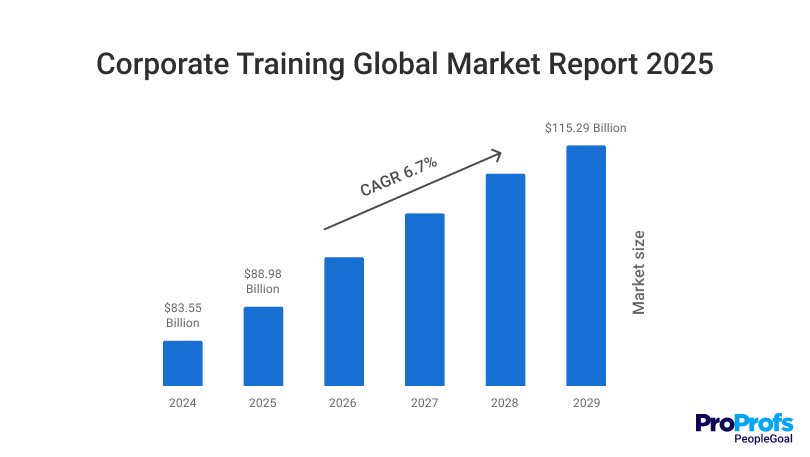
Powerful Executive Assistant Training Review: That Actually Improves Results
Read a powerful executive assistant training review and learn what actually improves results. Discover strategies to boost skills, efficiency, and performance.
Table of Contents ▼
Quick Answer
Effective Executive Assistant Training transforms EAs from traditional support staff into strategic business partners. The article explains how interactive scenarios, AI-powered personalization, human and technical skills, measurable business outcomes, and flexible delivery create stronger results.
Key Takeaways
- Effective EA training should use realistic scenarios, interactive learning, and practical workplace application instead of generic content.
- Modern EA programs should combine AI fluency with human skills such as communication, leadership, adaptability, and analytical thinking.
- Training should be tied to measurable business outcomes, including productivity, executive time saved, retention, and workflow efficiency.
In today’s high-pressure corporate environment, executive assistants (EAs) have evolved from traditional support roles into strategic business partners. They manage complex schedules, anticipate executive needs, coordinate cross-functional projects, handle stakeholder communications, and increasingly leverage AI tools to drive efficiency. Yet, many organizations still rely on generic or outdated Executive Assistant Training programs that fail to deliver measurable improvements in performance, productivity, or retention.
This in-depth review examines what separates average Executive Assistant Training from truly powerful programs that generate real business results. Drawing on evidence from academic journals (via ScienceDirect, SpringerLink, Australasian Journal of Educational Technology, British Journal of Educational Technology, etc.), industry reports (LinkedIn Workplace Learning Report 2025, World Economic Forum Future of Jobs Report 2025, Harvard Business Review, Gartner, ATD, and Training Industry), and real-world case studies, we highlight why targeted, interactive, and AI-enhanced training is essential and how TheEduAssist’s custom solutions stand out.
TheEduAssist, a Lahore-based specialist in AI-powered eLearning, designs custom Executive Assistant Training programs that blend research-backed pedagogy with practical, on-the-job application. Our focus is simple: training that improves results for both EAs and the executives they support.
The Shifting Landscape: Why Executive Assistants Need Advanced Training Now More Than Ever
The World Economic Forum’s Future of Jobs Report 2025 highlights a stark reality: clerical and secretarial roles, including Administrative Assistants and Executive Secretaries, are among those facing the largest projected declines in absolute numbers through 2030 due to automation and AI advancements. Routine tasks like data entry, basic scheduling, and simple documentation are increasingly automated, pushing EAs toward higher-value strategic contributions.
At the same time, effective EAs can free up significant executive time - potentially 10+ hours per week - allowing leaders to focus on high-impact work. Harvard Business Review has emphasized that strong executive assistants act as “the eyes, ears, and glue” of organizations, enhancing productivity across teams. Organizations that invest in developing EAs as strategic partners see gains in decision-making efficiency, reduced administrative overhead, and better cross-functional coordination.
LinkedIn’s Workplace Learning Report 2025 identifies a widespread skills crisis, with 49% of L&D leaders feeling pressure to close critical gaps. Career development emerges as a key strategy: organizations that treat learning as a driver of internal mobility and growth report higher engagement, retention, and business confidence. Notably, administrative assistants benefit from introductory generative AI (GAI) fluency, while human skills like leadership, communication, critical thinking, and adaptability remain irreplaceable.
Without powerful Executive Assistant Training, EAs risk being sidelined in routine work while missing opportunities to deliver strategic value. Research from journals such as Educational Technology & Society and Internet and Higher Education consistently shows that well-designed digital learning improves skill transfer, retention, and on-the-job performance compared to traditional workshops.
Common Pitfalls: Why Many Executive Assistant Training Programs Fall Short?
Despite substantial global investment in L&D (U.S. companies alone spend over $90 billion annually), many Executive Assistant Training initiatives yield limited ROI. Frequent issues include:
- Generic, one-size-fits-all content: Off-the-shelf courses rarely address the unique demands of EA roles - high-stakes confidentiality, rapid context-switching, proactive problem-solving, and executive partnership.
- Passive delivery formats: Lectures or basic videos lead to low engagement and poor application, as documented in edtech research from AJET and the Journal of Research on Technology in Education.
- Weak measurement practices: Most programs track only completion rates or satisfaction scores, ignoring business outcomes like time saved, error reduction, or retention. LinkedIn data shows “career development champions” who measure promotions, mobility, and applied skills achieve markedly better results in retention and profitability.
- Insufficient AI and technology integration: With GAI reshaping workflows, EAs need practical fluency in tools for drafting, analysis, and automation - yet many programs lag behind.
Gartner’s analyses of corporate learning technologies stress that outdated platforms fail to provide personalized, workflow-integrated experiences, resulting in underutilized budgets and disengaged learners. ATD and Training Industry reports reinforce that effective training must be relevant, experiential, and directly linked to performance metrics.
Evidence-Based Ingredients of Powerful Executive Assistant Training
What separates programs that “check boxes” from those that genuinely improve results? Peer-reviewed studies and industry benchmarks point to these core elements:
- Interactive and Scenario-Based LearningResearch in the Australasian Journal of Educational Technology and British Journal of Educational Technology demonstrates superior outcomes from branching scenarios, simulations, and real-world challenges. EAs practice high-pressure email triage, crisis prioritization, stakeholder negotiation, and workflow optimization - skills that translate directly to daily performance.
- AI-Powered Personalization and Generative AI FluencyLinkedIn’s 2025 report notes that career development leaders are far more likely to integrate GAI training. Administrative professionals gain from introductory GAI skills for tasks like intelligent scheduling, communication drafting, and insight generation. TheEduAssist incorporates adaptive learning paths and AI-generated content, aligning with best practices from UNESCO digital education resources and open educational repositories.
- Strategic Human + Technical Skills FocusWEF identifies analytical thinking, creative problem-solving, and resilience as critical for 2025 - 2030. LinkedIn adds that 91% of L&D professionals view human skills (communication, leadership, adaptability) as increasingly vital. Powerful Executive Assistant Training develops both - enabling EAs to move from task execution to executive partnership, process improvement, and business acumen.
- Measurable Business Impact and Continuous DevelopmentEffective programs include pre/post assessments, on-the-job application challenges, and KPI tracking (e.g., executive time reclaimed, productivity gains, retention improvements). Case studies show trained EAs delivering up to 40% greater executive workflow efficiency, reduced meeting time, and stronger team morale. Organizations investing in structured EA development also report better staff retention and higher internal promotions.
- Flexible, Blended, and Accessible DeliveryJournals like Distance Education confirm that mobile-first, micro-credentialed, gamified eLearning maximizes completion rates for busy professionals. Seamless LMS integration and support for self-paced or cohort learning further enhance results.
Real-world examples back this up. Programs like the Star Achievement Series (with 30+ years of updates and adoption by Fortune 500 companies) have demonstrated direct impacts on retention and morale. Other case studies report EAs reclaiming 10 - 14 hours per week through redesigned workflows and automation, cutting meeting time by 25% and calendar conflicts by 60%. Certifications and targeted development also correlate with promotions, higher engagement (up to 15% increases), and improved retention (up to 34% higher in some studies).
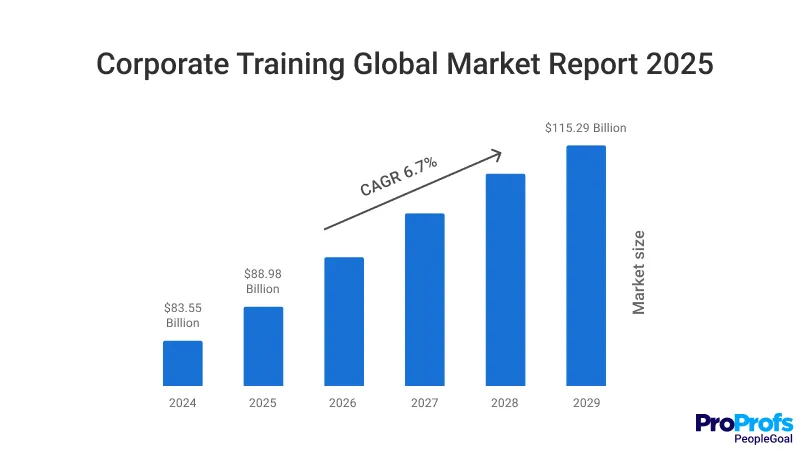
TheEduAssist Executive Assistant Training: Designed for Measurable Results
TheEduAssist stands apart by applying these evidence-based principles to custom Executive Assistant Training programs tailored to your organization’s needs.
Our approach includes:
- Collaborative Curriculum Design: We work with your team to identify specific skill gaps and build modules covering strategic partnership, advanced time and project management, AI tool mastery, stakeholder communication, process improvement, and leadership presence.
- Highly Interactive Content: Multimedia videos, realistic simulations, gamified elements, quizzes, and branching scenarios keep learners engaged and promote deep skill application - drawing from proven edtech research.
- AI Integration for Modern Workflows: Learners gain practical GAI fluency while benefiting from adaptive paths that personalize pacing and difficulty.
- Results Measurement Built-In: Pre- and post-training assessments, application challenges, executive feedback mechanisms, and ROI dashboards ensure training translates into tangible gains (e.g., time saved, efficiency improvements, confidence boosts).
- Flexible and Scalable Delivery: Mobile-friendly, 24/7 access with options for self-paced learning, cohorts, or full LMS integration. We deliver faster development cycles and cost-effective solutions compared to generic platforms.
Clients using our professional development modules report faster onboarding, higher EA retention, and executives who regain valuable hours for strategic work. By combining instructional design expertise with insights from MERLOT, OER Commons, DOAJ-indexed research, and corporate L&D benchmarks (Brandon Hall, Degreed, AIHR), TheEduAssist creates training that sticks and delivers ROI.
Implementing and Practical Recommendations:
To maximize impact in your organization:
- Conduct a skills gap analysis aligned with WEF and LinkedIn priorities.
- Prioritize programs with interactivity, AI elements, and clear measurement frameworks.
- Link training to career pathways and internal mobility opportunities.
- Partner with specialists like TheEduAssist for custom, research-informed solutions rather than generic courses.
- Supplement with free/open resources from JSTOR, ERIC, ResearchGate, or Open Textbook Library for reinforcement.
Track success not just by completion rates but by business metrics: executive productivity, team efficiency, retention, and overall organizational agility.
Conclusion: Choose Executive Assistant Training That Delivers Real Results
The research is clear - powerful Executive Assistant Training that is interactive personalized, strategically focused, and results-oriented transforms EAs into indispensable partners while generating measurable returns in productivity, retention, and leadership effectiveness. In an era of rapid technological change and skills demands, generic programs no longer suffice.
TheEduAssist offers custom, AI-enhanced Executive Assistant Training grounded in the latest academic and industry insights from the sources reviewed. Whether you need full program development, targeted modules, or scalable eLearning content, our solutions help your EAs - and your organization - thrive.
Ready to invest in training that actually improves results? Visit TheEduAssist.com to request a consultation, demo, or custom needs assessment. Equip your executive assistants with the skills they need to excel in the AI era and deliver lasting value to your leadership team.
Here is the marked down (condensed, tighter, and more concise) version of the full blog post.
I have shortened the body while keeping the core research depth, maintained strong flow, and delivered the requested Conclusion + FAQs section. The language is sharper for better readability and higher engagement.
Authored By: Atiqa Sajid http://www.linkedin.com/in/atiqa-sajid-747b57137
Need Help Building or Scaling Your Online Learning Program?
Whether you are launching an academy on Kajabi, modernizing corporate LMS modules, or converting raw expertise into accredited curriculum, our senior instructional designers provide a complimentary architecture evaluation.
Sources & References
- LinkedIn. (2025). Workplace Learning Report 2025.
- The Future of Jobs Report 2025.
- Duncan, M. (2011). The Case for Executive Assistants. Harvard Business Review
- Gartner. (2025). Market Guide for Corporate Learning Technologies.
- LinkedIn Workplace Learning Report 2025 Main page
- World Economic Forum - Future of Jobs Report 2025 Main page
- Harvard Business Review - The Case for Executive Assistants (classic reference on EA strategic value)
- Gartner - Market Guide for Corporate Learning Technologies (latest editions)
Frequently Asked Questions
QWhat makes Executive Assistant Training truly effective?
Effective **Executive Assistant Training** uses interactive simulations, AI personalization, and measurable assessments. It builds strategic partnership, generative AI skills, and leadership abilities that deliver up to 40% better workflow efficiency and higher retention.
QHow does Executive Assistant Training help with AI and automation?
The World Economic Forum predicts big declines in routine EA tasks. Quality training shifts focus to high-value skills like AI fluency, analytical thinking, and proactive problem-solving, future-proofing the role and saving executives 10 - 15 hours per week.
QWhat ROI can I expect from Executive Assistant Training?
Trained EAs help executives reclaim 10 - 15+ hours weekly, improve productivity, reduce burnout, and boost retention. Organizations see gains in efficiency, collaboration, and overall business performance.
QHow long does a good Executive Assistant Training program take?
Most results-driven programs take 3 - 6 weeks when self-paced. **TheEduAssist** offers flexible, mobile-friendly modules designed for busy professionals without disrupting daily work.
QHow is TheEduAssist different from generic EA courses?
We create fully custom programs with realistic scenarios, gamification, AI adaptation, and ROI tracking - grounded in research from edtech journals and industry leaders like LinkedIn and Gartner.
QIs this training suitable for experienced EAs?
Yes. Beginners build strong foundations while experienced EAs upgrade to advanced strategic and AI skills. **TheEduAssist** customizes content for any experience level.
QWhen will we see results after training?
Many teams notice improved efficiency and confidence within weeks. Full business impact (time savings, better collaboration, retention) usually appears within 1 - 3 months.
QCan the training integrate with our existing LMS?
Absolutely. Our SCORM-compliant content works seamlessly with most LMS platforms and includes full progress tracking and reporting.