

TheEduAssist e-learning design agency logo

Smart Learning Strategies to Remember More & Perform Better

Learning does not mean studying more, but learning smarter. The difference between poor performers and confident problem solvers is often reduced to a single factor: learning strategies. When learners know how to learn, they can retain information longer, are able to apply the information to a greater extent, and are able to perform more confidently in a real-life scenario. The traditional memorization methods are now not sufficient in the current dynamic education and workplace atmosphere. Learning strategies that are practical and aid in understanding, adaptability, and lifelong development are required by students, professionals, and organizations. This guide describes what learning strategies are, why they are important, and how you can use research-supported strategies to enhance the results of learning. What are Learning Strategies? these are the ways or systems whereby learners process, learn, and remember information effectively. These strategies make people active, reflective, and practical instead of passive reading or listening. Learning strategy assists learners to: The strategies find extensive application in schools, universities, corporate training, and training design. The reason why Learning Strategies are more important than ever The current generation of learners is overwhelmed with information. In the absence of a proper learning and development strategy, knowledge is disjointed and easily lost. The main advantages of effective learning strategies: Educational research findings have shown that learners who use research-based instructional strategies do much better than those who use passive study techniques. Learning Strategies (Types and examples) Various students require different styles. The best and most popular strategies are listed below. Cognitive Learning Strategies Cognitive learning strategies are intervention methods that involve employing the mind to learn.Cognitive learning strategies refer to those intervention strategies that require the use of the mind to learn. These concern processing and processing information. Examples include: These are frequently subjects in an instructional design course or an instructional system design program. Metacognitive Learning Strategies Learning Strategies: About metacognition, the strategies can be classified into two groups: metacognitive learning strategies and information processing strategies. Metacognition refers to thoughtful thinking. Students who employ this method: This is a key strategy in the planning and development of training and leadership programs. Active Learning Strategies Active learning transforms passive learners into active learners. Examples include: Such strategies are very much aligned with research-based instructional strategies. Microlearning Strategies Microlearning is content delivered in brief and focused sessions. Why it works: Microlearning is an idea that is often applied by a number of organizations to facilitate ongoing learning. Learning vs Teaching Strategies Learning Strategies Teaching Strategies Concentrate on student behavior Concentrate on the teacher’s presentation Promote self-direction Tend to be content-centered Enhance the long-term retention Enhance the short-term understanding Individual adaptable Standardized to groups Good learning results occur when the two strategies are combined. The role of Instructional System Design in the Support of Learning Strategies Instructional system design can assure that the instructional strategies are planned throughout training programs and not introduced at random. Key components include: An effective system will be designed to match learning activities with actual performance objectives. Creating a Personal Learning Environment A personal learning environment provides the learners with ownership of learning. Creating the elements of a successful personal learning environment: This model promotes lifelong learning and career development. Learning tips that are applicable in practice Tip 1: Set Clear Learning Goals Know what success is before you begin. Assess objectives in relation to the terminal learning objective. Tip 2: Separate Content into small snatches Available microlearning techniques will help prevent overload and enhance attention. Tip 3: Teach What You Learn The process of explaining concepts to others makes them stronger in understanding and remembering. Tip 4: Put Knowledge into Practice Having practised is much stronger than rereading notes. Tip 5: Reflect Regularly Ask: Infographic: Strategy Framework of Effective Learning This cycle is the focus of the contemporary models of learning and development strategies. The pitfalls that the learners can fall into These errors can be avoided to a large extent, which will enhance learning. Professional Training Learning Strategies Structured strategies are used in organizations to: A variety of corporate programs are a combination of instructional design courses, a micro-learning platform, and performance-based assessments. The selection of the appropriate Learning strategy Learning Objective Strategic Approach Suggestion Retention of knowledge Cognitive strategies Application of skills Active learning Self-enhancement Self-monitoring techniques Learning on the job perpetually Microlearning Professional development Self learning Frequently Asked Questions In simple words, what are learning strategies? Strategies in learning are those approaches that enable you to perceive, store, and apply information in a better manner. What is the relevance of learning strategies? They enhance memory, interaction, and problem-solving, and ultimately lessen the time of study. Do learning strategies benefit professionals? Yes. They are popular in training of corporations, equipping of leadership, and learning of skills. Are the research-supported learning strategies? Yes. A good number of them are research-based instructional methods that have been found to improve learning. What are the ways to begin using learning strategies? Keep it small: establish objectives, divide content into bits, knowledge reflection, and implementation. Final Thoughts Intelligence and effort are not in themselves sufficient factors to learn. It is concerned with applying the appropriate strategies when it is appropriate. As a student, an educator, or a professional, you can redesign your approach to learning and problem-solving with the help of Theduassist’s structured and research-based methods. By matching your learning objectives with known strategies that modern tools and tools supported by the instructional system design enable you to accomplish, you develop skills that don’t wear out; instead, you develop what combines into knowledge.

learning strategies.
General Author: admin Published on:
5 min read

Learning does not mean studying more, but learning smarter. The difference between poor performers and confident problem solvers is often reduced to a single factor: learning strategies. When learners know how to learn, they can retain information longer, are able to apply the information to a greater extent, and are able to perform more confidently in a real-life scenario.

The traditional memorization methods are now not sufficient in the current dynamic education and workplace atmosphere. Learning strategies that are practical and aid in understanding, adaptability, and lifelong development are required by students, professionals, and organizations. This guide describes what learning strategies are, why they are important, and how you can use research-supported strategies to enhance the results of learning.

What are Learning Strategies?

these are the ways or systems whereby learners process, learn, and remember information effectively. These strategies make people active, reflective, and practical instead of passive reading or listening.

Learning strategy assists learners to:

  • Comprehend complicated ideas
  • Improve memory and recall
  • How to solve problems more effectively
  • Applicability of knowledge to life

The strategies find extensive application in schools, universities, corporate training, and training design.

The reason why Learning Strategies are more important than ever

The current generation of learners is overwhelmed with information. In the absence of a proper learning and development strategy, knowledge is disjointed and easily lost.

The main advantages of effective learning strategies:

  • Better memorization of data
  • Improved ability to solve problems
  • Higher learner engagement
  • Faster skill development
  • Trust in knowledge application

Educational research findings have shown that learners who use research-based instructional strategies do much better than those who use passive study techniques.

Learning Strategies (Types and examples)

Various students require different styles. The best and most popular strategies are listed below.

Cognitive Learning Strategies

Cognitive learning strategies are intervention methods that involve employing the mind to learn.Cognitive learning strategies refer to those intervention strategies that require the use of the mind to learn.

These concern processing and processing information.

Examples include:

  • Summarizing key points
  • Creating concept maps
  • Making comparisons
  • Asking “why” and “how” questions

These are frequently subjects in an instructional design course or an instructional system design program.

Metacognitive Learning Strategies

Learning Strategies: About metacognition, the strategies can be classified into two groups: metacognitive learning strategies and information processing strategies.

Metacognition refers to thoughtful thinking.

Students who employ this method:

  • Plan how they will learn
  • Monitor their progress
  • Look back on what has gone wrong and what has gone right

This is a key strategy in the planning and development of training and leadership programs.

Active Learning Strategies

Active learning transforms passive learners into active learners.

Examples include:

  • Group discussions
  • Case studies
  • Role-playing
  • Problem-based learning

Such strategies are very much aligned with research-based instructional strategies.

Microlearning Strategies

Microlearning is content delivered in brief and focused sessions.

Why it works:

  • Reduces cognitive overload
  • Fits into busy schedules
  • Improves completion rates

Microlearning is an idea that is often applied by a number of organizations to facilitate ongoing learning.

Learning vs Teaching Strategies

Learning StrategiesTeaching StrategiesConcentrate on student behaviorConcentrate on the teacher’s presentationPromote self-directionTend to be content-centeredEnhance the long-term retentionEnhance the short-term understandingIndividual adaptableStandardized to groups

Good learning results occur when the two strategies are combined.

The role of Instructional System Design in the Support of Learning Strategies

Instructional system design can assure that the instructional strategies are planned throughout training programs and not introduced at random.

Key components include:

  • Clearly identified terminal learning objectives
  • Logical content sequencing
  • Practical assessments
  • Feedback loops

An effective system will be designed to match learning activities with actual performance objectives.

Creating a Personal Learning Environment

A personal learning environment provides the learners with ownership of learning.

Creating the elements of a successful personal learning environment:

  • Digital note-taking tools
  • Communities Online courses
  • Reflection journals
  • Skill-tracking dashboards

This model promotes lifelong learning and career development.

Learning tips that are applicable in practice

Tip 1: Set Clear Learning Goals

Know what success is before you begin. Assess objectives in relation to the terminal learning objective.

Tip 2: Separate Content into small snatches

Available microlearning techniques will help prevent overload and enhance attention.

Tip 3: Teach What You Learn

The process of explaining concepts to others makes them stronger in understanding and remembering.

Tip 4: Put Knowledge into Practice

Having practised is much stronger than rereading notes.

Tip 5: Reflect Regularly

Ask:

  • What did I learn?
  • What was confusing?
  • How can I improve next time?

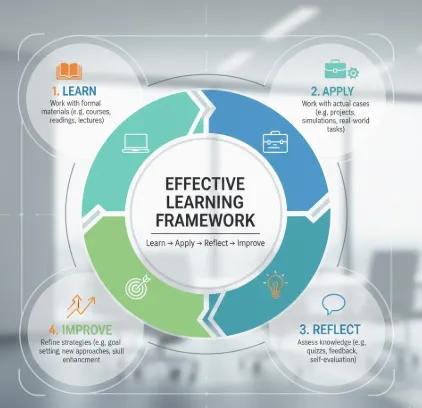
Infographic: Strategy Framework of Effective Learning

This cycle is the focus of the contemporary models of learning and development strategies.

The pitfalls that the learners can fall into

  • Memorization is insufficient
  • Ignoring feedback
  • Education with no purpose
  • Skipping reflection
  • Avoiding active practice

These errors can be avoided to a large extent, which will enhance learning.

Professional Training Learning Strategies

Structured strategies are used in organizations to:

  • Reduce skills gaps
  • Enhance staff performance
  • Increase training ROI
  • Support career development

A variety of corporate programs are a combination of instructional design courses, a micro-learning platform, and performance-based assessments.

The selection of the appropriate Learning strategy

Learning ObjectiveStrategic Approach SuggestionRetention of knowledgeCognitive strategiesApplication of skillsActive learningSelf-enhancementSelf-monitoring techniquesLearning on the job perpetuallyMicrolearningProfessional developmentSelf learning

Frequently Asked Questions

In simple words, what are learning strategies?

Strategies in learning are those approaches that enable you to perceive, store, and apply information in a better manner.

What is the relevance of learning strategies?

They enhance memory, interaction, and problem-solving, and ultimately lessen the time of study.

Do learning strategies benefit professionals?

Yes. They are popular in training of corporations, equipping of leadership, and learning of skills.

Are the research-supported learning strategies?

Yes. A good number of them are research-based instructional methods that have been found to improve learning.

What are the ways to begin using learning strategies?

Keep it small: establish objectives, divide content into bits, knowledge reflection, and implementation.

Final Thoughts

Intelligence and effort are not in themselves sufficient factors to learn. It is concerned with applying the appropriate strategies when it is appropriate. As a student, an educator, or a professional, you can redesign your approach to learning and problem-solving with the help of Theduassist’s structured and research-based methods.

By matching your learning objectives with known strategies that modern tools and tools supported by the instructional system design enable you to accomplish, you develop skills that don’t wear out; instead, you develop what combines into knowledge.

Share this guide: Copied!
digital learning elearning indesign learning strategies online course trainingskills

Need help turning your expertise into a structured online learning experience?

Talk to TheEduAssist about course planning, platform setup, LMS migration, or content conversion.

Related Resources

Gamification in Corporate Training: Turning Compliance into Engagement
General

Gamification in Corporate Training: Turning Compliance into Engagement

Compliance training has a reputation problem: low engagement, low retention, and high drop-off. Gamification fixes that. Here's how points, levels, and real-world game mechanics turn mandatory training into something employees actually want to complete.

Review Pending Read Article
AI Assist

AI can help you understand the page. For confirmed scope, timeline, and pricing, talk to TheEduAssist sales team.