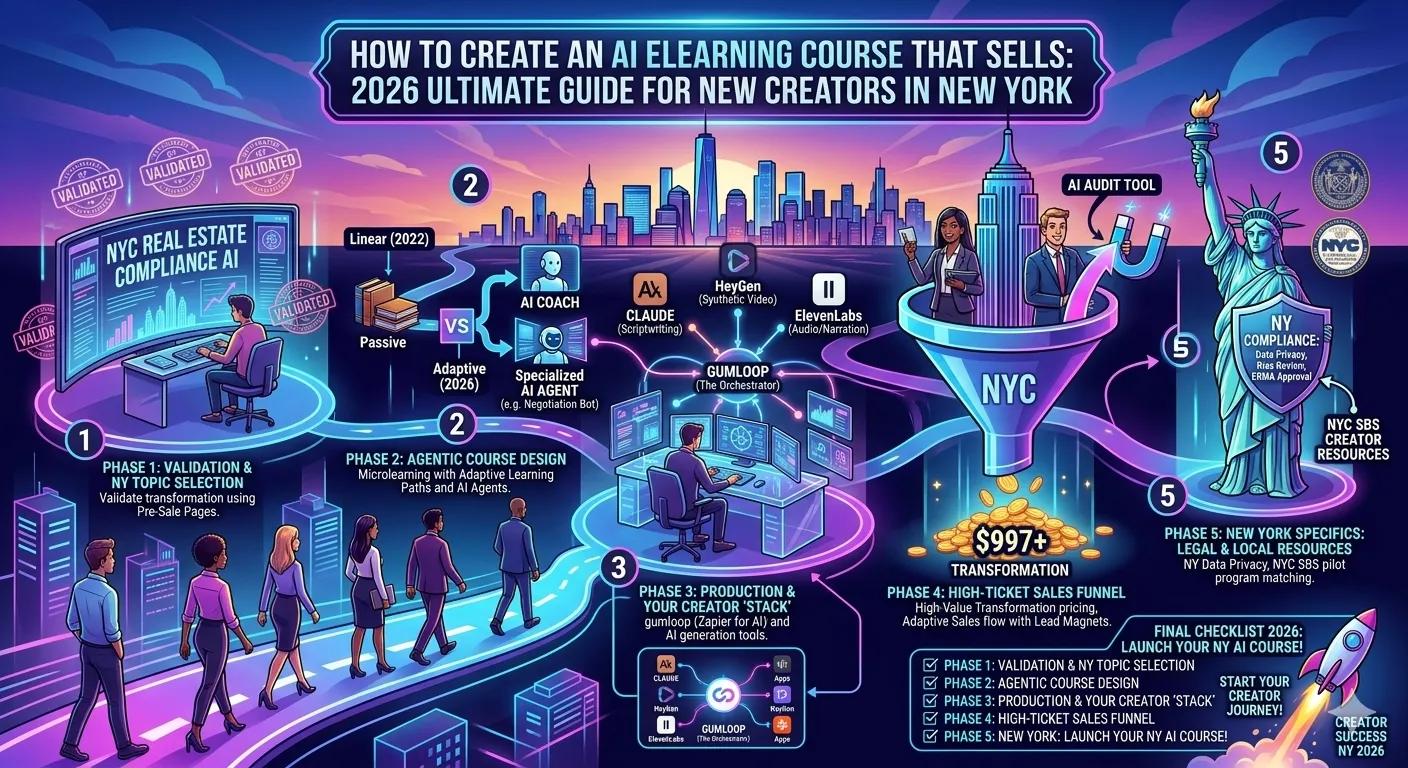
Artificial Intelligence is no longer a niche skill; it’s becoming a core competency across industries. As a result, many educators, coaches, and eLearning startups in New York are launching AI-focused online courses.
From New York City and Buffalo to Rochester, Yonkers, and Syracuse, creators are exploring how to package their AI knowledge into scalable digital learning products.
However, a common challenge keeps surfacing:
- Experts understand AI concepts
- They want to teach through an online course
- But they struggle to design structured, engaging, and practical learning experiences
Most AI courses fail not because of lack of expertise, but because of poor instructional design and weak content structure.
Creating a successful AI course in 2026 requires more than just recording lectures. It requires a combination of:
- Instructional design
- Hands-on learning experiences
- Structured content development
- Practical implementation exercises
This guide explains how to build an AI eLearning course that not only educates but also sells.
Selling AI courses online byu/CellistNegative1402 inmicro_saas
Why Most AI Courses Fail to Sell:
Before building a successful course, it’s important to understand why many fail.
Common issues include:
- Overly theoretical content
- Lack of real-world applications
- Poor course structure
- No hands-on exercises
- Unclear learner outcomes
AI is a complex subject. Without proper structure, learners feel overwhelmed and disengage quickly.
In line with eLearning trends 2026, learners now expect:
- Practical, job-ready skills
- Scenario-based learning
- Interactive experiences
- Short, digestible lessons
Courses that ignore these expectations struggle to attract and retain learners.
Start With the End: Define a Clear Learning Outcome
Successful courses begin with a clear transformation.
Instead of:“Teach AI concepts”
Define outcomes like:“Help non-technical learners build and deploy simple AI workflows for business automation.”
Clear outcomes help guide:
- Curriculum design
- Lesson structure
- Assessments
- Marketing messaging
Example:A creator in New York City targeting entrepreneurs should focus on business use cases of AI, not just technical theory.
Design a Curriculum That Builds Skills (Not Just Knowledge):
A high-converting AI course is built around progressive skill development.
Example Curriculum:
ModuleFocusModule 1Introduction to AI fundamentalsModule 2Understanding AI tools and platformsModule 3Prompt engineering basicsModule 4Building simple AI workflowsModule 5Real-world business applicationsModule 6Capstone project
This structure ensures learners move from basic understanding to real-world implementation.
For learners in Buffalo or Rochester, this kind of structured progression makes complex AI concepts easier to grasp.
Make It Practical: Add Hands-On Labs and Exercises
AI cannot be learned passively.
Courses must include:
- Guided lab exercises
- Real-world scenarios
- Project-based learning
- Implementation tasks
Examples:
- Building a chatbot
- Automating content workflows
- Creating AI-generated marketing assets
Hands-on learning transforms courses from informational to transformational.
Create Engaging Learning Content (Not Just Videos):
Modern content development for AI courses includes multiple formats:
- Video lessons
- Step-by-step guides
- Worksheets
- Templates
- Interactive tasks
Short microlearning lessons (5–10 minutes) are especially effective.
This approach aligns with custom eLearning strategies, where content is tailored for specific learner needs and skill levels.
Choose the Right LMS Platform:
Your course delivery platform plays a key role in user experience.
Popular options include:
- Kajabi
- Thinkific
- Teachable
These platforms allow creators to:
- Structure modules
- Track learner progress
- Host downloadable resources
- Deliver quizzes and certifications
For creators in Yonkers or Syracuse, a well-structured LMS ensures learners can navigate content easily.
Build Authority Before Selling:
One of the biggest mistakes new creators make is launching a course without building trust.
To sell effectively, you need to:
- Share educational content on YouTube
- Publish blogs on AI topics
- Offer free mini-lessons
- Build an email list
This positions you as an expert and builds credibility before the sale.
Quick Comparison Table: Best Platforms for AI Courses
PlatformBest ForKey AdvantageKajabiCourse businessesBuilt-in marketing toolsThinkificEducatorsFlexible course designTeachableBeginnersEasy setup
Cost Reality Check: Creating an AI eLearning Course
Building a professional AI course involves investment.
CategoryEstimated CostInstructional design$2,000 – $6,000Video production$1,000 – $4,000Learning materials$500 – $2,000LMS subscription$39 – $199/month
Many creators start small, but scaling requires investment in quality content and structured learning design.
Unique Perspective: The “Skill-to-System” Approach
In 2026, successful AI courses are shifting from teaching tools to teaching systems.
Instead of:“Here’s how ChatGPT works”
Courses now focus on:
- Building AI-powered workflows
- Integrating tools into business processes
- Solving real-world problems
This system-based learning approach increases course value and market demand.
Final Thoughts:
For creators in New York City, Buffalo, Rochester, Yonkers, and Syracuse, AI education represents one of the biggest opportunities in digital learning.
However, building a successful course requires more than expertise.
By combining:
- Instructional design
- Structured curriculum
- Hands-on labs
- Strong LMS delivery
- Strategic content development
You can create an AI course that not only teaches, but sells and scales.
References:
- https://www.coursebox.ai/blog/online-learning-statistics?utm_
- https://dariusforoux.com/online-course-creation-ai/
FAQs
What should an AI eLearning course include?A strong course should include structured modules, practical labs, real-world scenarios, and project-based learning experiences.
Do AI courses need technical knowledge?Not necessarily. Many successful courses are designed for non-technical learners using simplified workflows and tools.
Which LMS is best for AI courses?Platforms like Kajabi, Thinkific, and Teachable are widely used.
How long does it take to create an AI course?Most courses take 4–10 weeks depending on complexity and production quality.
How can TheEduAssist help build an AI course?Through edu-assist consulting services, theeduassist.com helps creators design custom eLearning programs, structured curriculum frameworks, and high-quality AI course content.
Ready to launch your AI eLearning course in New York in 2026? Start with a clear learning outcome and build a practical, hands-on curriculum that delivers real transformation.
Authored By: Sofia Arif